📌 Introduction📌
Before I entered the world of designer toys, I thought they were just quirky collectibles. But over the years—through conversations with creators, visits to conventions, and the slow build of my own collection—I came to see them as something much more profound: **designer toys are vessels of cultural storytelling
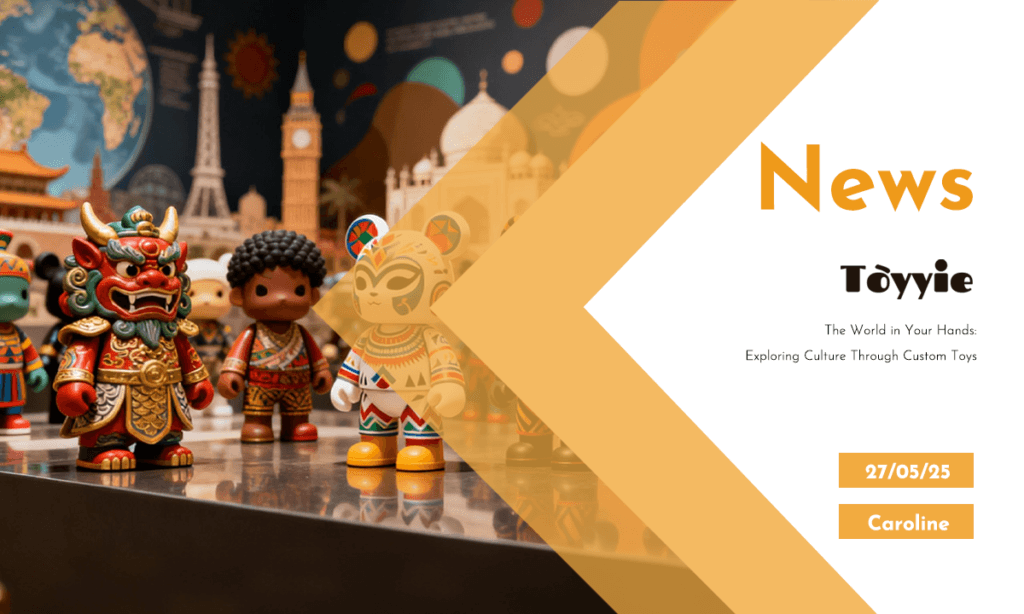
They are not only expressive and unique in design—they carry heritage, identity, and even political expression. Here’s how custom designer toys have evolved into **modern artifacts of cultural exchange
🌍 When Toys Speak a Cultural Language
I once received a hand-painted resin figure from a Southeast Asian artist. Inspired by a Thai guardian spirit, it bore symbolic tattoos and colors drawn straight from temple murals. I didn’t need to know the full folklore—it *spoke* to me.
That’s the power of custom toys. Artists embed myths, traditions, and local narratives into 3D sculpts. These toys aren’t just visual treats; they’re **intimate cultural statements**.
🌆 Local Roots, Global Reach
Take **Michael Lau**, the Hong Kong pioneer often called the godfather of urban vinyl. His 90s-inspired toys were filled with street fashion, skate vibes, and the raw energy of pre-handover Hong Kong. These weren’t just toys. They were **attitudes** in vinyl form—and the world paid attention.
Or look at **Shiffa**, a Mexican artist who fuses pop surrealism with Aztec and Mayan iconography. His toys are visual time machines—small pieces of Latin America, reaching collectors in Paris or Tokyo.
🛠️ Cultural Translation Through Customization
Customization gives artists creative license to remix culture. From childhood influences to historical retellings, designers interpret their worlds through modern forms.
Take **MyTummyToys** from Indonesia. Their “Shi-Shi” figure draws on traditional lion statues found at temple gates. But here, it’s playful, plump, and wears sneakers. **It’s both homage and evolution**.
These pieces trigger dialogue, prompting questions like “Where is this from?” or “What does this symbol mean?”—and in doing so, they become **gateways to cultural awareness**.
🎭 East Meets West: The Power of Cultural Mashups
Some toys mix **Western pop culture with local identity**. I’ve seen Darth Vader in Japanese kabuki robes, and Pokémon transformed into Filipino jeepney drivers. At first glance, it may seem playful or even odd, but they **work**—sparking connection, reflection, and often, joy.
They also raise deeper questions: **What happens when culture transcends borders?** How do we reinterpret global icons through local eyes?
🧠 Designer Toys as Emotional Totems
To many, a toy is just shelf décor. But to collectors like me, **each piece is a narrative**—a small sculpture with memory, meaning, and intention.
These are not mass-manufactured trinkets. They’re **story-driven, artist-led creations**. One toy might symbolize hurricane survival in Puerto Rico. Another might carry Berlin’s rebellious graffiti spirit. All are tactile fragments of someone’s life experience.
🔚 Final Thoughts: Culture in Your Hands
In our digital age of endless scrolling and fast content, **designer toys slow things down**. They make us pause. They make us feel.
So the next time you see a custom toy, look closer. Behind the paint and the pose, you might find a childhood, a city, or a culture—captured in vinyl and shared with the world.