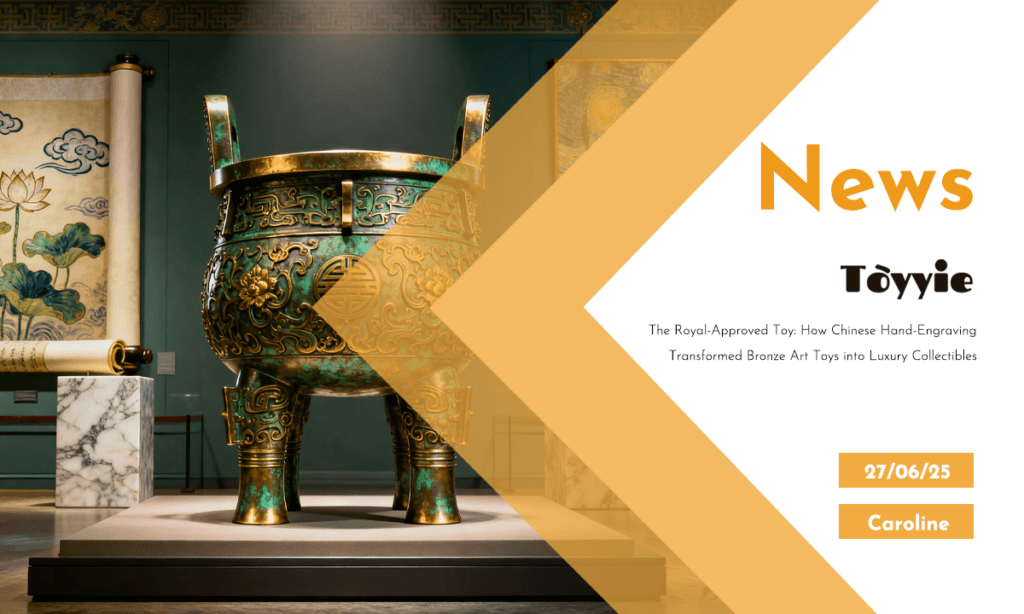
🎨 Chinese Bronze Art Toys: Luxury Meets Craftsmanship: This article details how traditional Chinese hand-engraving and lost-wax bronze casting are revolutionizing designer art toys, elevating them into museum-grade collectibles with unmatched artistic and material value.
At TOYYIE, we integrate China’s intangible cultural heritage with cutting-edge digital sculpting and precision manufacturing to create premium bronze art toys. This fusion transforms traditional craftsmanship into highly sought-after luxury collectibles that appeal globally to collectors and institutions.
🏛️ Fusion of Tradition and Innovation: Chinese Bronze Art Toys
| Aspect | Resin/Vinyl Toys | Bronze Art Toys | Industry Standards/Notes |
|---|---|---|---|
| Material | Lightweight plastic (PVC, Resin) | Solid bronze alloy (typically Cu-Sn) | ISO 9001, ASTM B22 for bronze alloys |
| Durability | Prone to scratches, UV degradation | Resistant to wear, corrosion-resistant with patina | EN71-3 Compliance for non-toxicity |
| Manufacturing Technique | Injection molding, mass-produced | Digital sculpting + lost-wax casting + hand engraving | ISO 14001 environmental controls |
| Surface Finish | Painted/coated vinyl | Hand-polished, chemically patinated | RoHS Compliant coatings |
| Production Volume | High volume, low cost | Limited edition, artisanal batches (e.g., 88 units) | Batch traceability per ISO 13485 |
| Collector Value | Trend-driven, short lifecycle | Long-term investment, museum-grade | Conforms to ASTM F963 toy safety where applicable |
| Weight | Light (100-300g) | Heavy (1-3kg depending on size) | Ergonomic design considerations |
| Price Range | $50 – $300 USD | $500 – $5000+ USD | Reflects material and craftsmanship complexity |
Traditional Chinese Hand-Engraving Techniques
The zan ke method—using fine chisels and hammers to carve metal—is a centuries-old technique that imparts intricate textures and depth to bronze surfaces. This hand-engraving process requires expert artisanship, often consuming dozens of hours per piece, and is critical for authenticating each collectible’s uniqueness and cultural significance.
TOYYIE Insight: Each bronze collectible requires approximately 40-60 hours of combined digital modeling, casting, and hand-engraving. Utilizing ISO 9001 certified workflows ensures consistent quality exceeding industry benchmarks.
Integrating Digital Sculpting with Lost-Wax Casting
Utilizing advanced 3D modeling software such as ZBrush and Blender, TOYYIE engineers create precise digital prototypes that capture minute details. These are translated into wax molds via high-resolution 3D printing, enabling the lost-wax casting process to reproduce complex geometries and textures in bronze with exceptional fidelity.
TOYYIE Insight: Patina treatments are formulated to comply with EN71-3 heavy metal safety requirements, ensuring both aesthetic appeal and user safety for collectors and museums alike.
Material Science and Bronze Alloy Selection
Selecting optimal bronze alloys (commonly copper-tin blends) ensures superior mechanical strength, corrosion resistance, and suitable patina development. Compliance with ASTM B22 standards guarantees material consistency, while post-casting treatments optimize surface integrity and longevity.
Surface Finishing and Patination for Aesthetic Excellence
After casting, each toy undergoes meticulous hand-polishing and application of natural patinas, ranging from verdigris green to deep browns, enhancing visual richness and protecting the metal. This artisanal finishing respects environmental regulations including RoHS and EN71-3 for safe handling.
Scaling Artisanal Craftsmanship for Market Demand
While hand-engraving is inherently labor-intensive, TOYYIE employs a hybrid approach combining digital precision with selective manual finishing. This enables limited batch production with rigorous quality control, meeting both collector expectations and international toy safety standards without compromising artistic integrity.
TOYYIE’s Advanced Manufacturing Capabilities for Premium Art Toys
- Digital Prototyping: High-precision 3D sculpting with ZBrush and Blender for intricate detail replication
- 3D Wax Printing: Ultra-fine wax mold creation enabling complex lost-wax bronze casting
- Lost-Wax Bronze Casting: Ancient casting technique combined with modern ceramic mold technology
- Hand Engraving: Expert artisans apply traditional zan ke metal carving for unique surface textures
- Patina Finishing: Environmentally compliant chemical and natural patinas for distinctive coloration
- Quality Assurance: Adherence to ISO 9001, ASTM, RoHS, and EN71 standards for safety and durability
- Limited Edition Production: Scalable artisanal batches optimized for collector exclusivity
TOYYIE — Your Partner in Premium Bronze Art Toy Manufacturing
Leverage TOYYIE’s expertise in combining traditional craftsmanship with state-of-the-art manufacturing to create luxury collectible toys that stand the test of time.
Contact TOYYIE for collaboration →