🚢 Mastering Art Toy Export Compliance: Ensure art toy shipments meet stringent EU REACH and ASTM F963 standards to avoid costly customs penalties and shipment seizures.
As a leading OEM/ODM in premium toy manufacturing, TOYYIE emphasizes strict adherence to international safety regulations for art toys. Navigating complex cross-border logistics requires comprehensive understanding of chemical compliance to guarantee market access and protect brand reputation.
🔍 Key Compliance Standards for Art Toy Exports
| Regulation | Scope | Chemical Restrictions | Testing Requirements |
|---|---|---|---|
| EU REACH | Applies to all products sold in the EU | Phthalates (DEHP, BBP, DBP) restricted; heavy metals (lead, cadmium) limits; SVHC control | Mandatory testing at ILAC-accredited labs; full chemical analysis |
| ASTM F963 (U.S.) | Toy safety standard for physical, mechanical, and chemical hazards | Phthalate limits similar but less extensive than REACH; flammability requirements | Third-party testing; Children’s Product Certificates (CPC) for CPSIA compliance |
| CPSIA (U.S.) | Consumer Product Safety Improvement Act | Restricts lead content to <100 ppm in children’s products | Mandatory third-party lab testing and certification |
| ISO 8124 | International toy safety standard | Limits on heavy metals and phthalates; mechanical safety | Testing by accredited laboratories |
| EN 71 Series | European toy safety standards | Chemical, physical, and mechanical safety requirements | Comprehensive testing including migration of elements and flammability |
Understanding EU REACH Chemical Restrictions
The EU REACH regulation enforces strict limits on harmful substances such as phthalates (e.g., DEHP, BBP, DBP) used as PVC plasticizers, and heavy metals like lead and cadmium. Compliance requires detailed chemical testing by ILAC-accredited laboratories to detect any Substances of Very High Concern (SVHC). Manufacturers must ensure raw materials meet these standards to prevent shipment holds or penalties.
TOYYIE Insight: Our in-house QC teams enforce ILAC-accredited chemical testingEU REACH and ASTM F963 standards.
ASTM F963 and CPSIA Compliance for US Market
In the United States, ASTM F963 governs toy safety focusing on physical hazards, flammability, and toxic chemicals. Compliance includes adherence to CPSIA mandates which restrict lead content to <100 ppm and require issuance of Children’s Product Certificates (CPCs). Third-party testing by accredited labs is essential before market entry, especially for platforms like Amazon.
Material Selection: Avoiding Restricted Substances
Optimizing material choices is critical. Replacing PVC with alternatives like TPE (Thermoplastic Elastomer) or high-grade silicone eliminates the need for phthalates. For rigid components, ABS or PU resin resins provide compliant, durable options. Always verify raw material MSDS (Material Safety Data Sheets) from suppliers to confirm chemical compliance.
Documentation and Labeling Best Practices
Accurate and comprehensive documentation is vital for smooth customs clearance. This includes maintaining complete test reports for at least five years, proper labeling in accordance with regulatory standards, and providing all necessary certificates such as CPCs. Electronic submission of documentation to customs expedites verification and reduces risk of shipment delays.
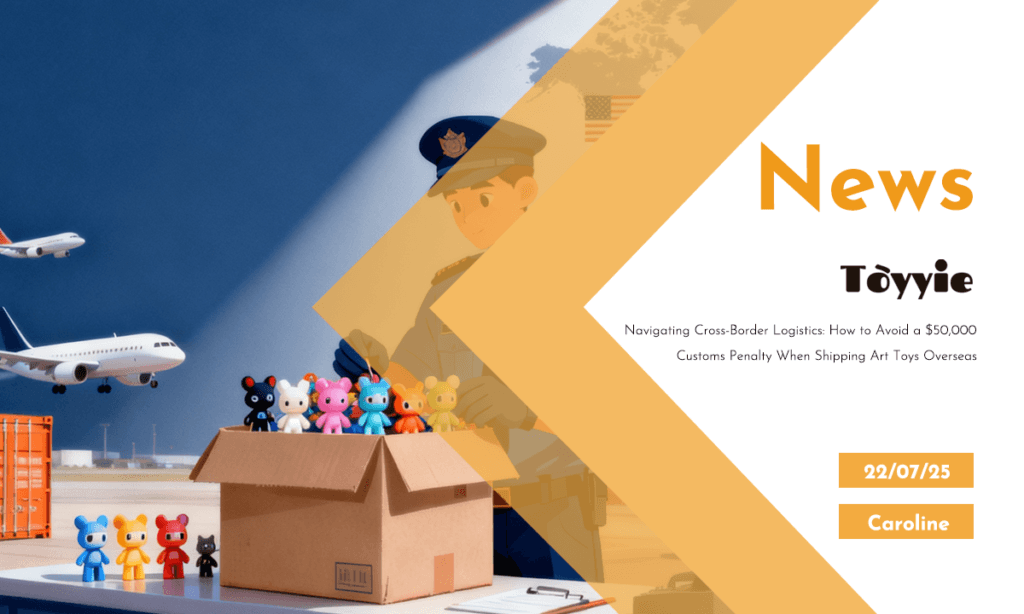
Case Study: Avoiding a $50,000 Customs Penalty
A vinyl figure shipment was seized in Europe due to phthalate levels exceeding EU REACH limits, resulting in a fine of approximately €45,000 and operational delays. This underscores the importance of rigorous pre-shipment chemical testing and supplier audits. TOYYIE’s stringent quality control protocols mitigate such risks by integrating compliance checks at every manufacturing stage.
TOYYIE’s Compliance & Manufacturing Capabilities
- Advanced Material Engineering: Utilization of TPE, silicone, ABS, and PU resins to meet chemical safety requirements
- Certified Testing Partnerships: Collaboration with top ILAC-accredited labs for comprehensive chemical and physical safety testing
- Regulatory Documentation: Expert preparation and management of CPCs, MSDS, and compliance certificates
- Quality Assurance: Multi-stage inspections with emphasis on chemical composition and mechanical safety
- Custom Packaging & Labeling: Fully compliant labeling solutions tailored for EU & U.S. markets
TOYYIE — Your Trusted Partner in Compliant Art Toy Manufacturing
Leverage our technical expertise and stringent compliance protocols to successfully export premium art toys globally without customs risks.
Contact TOYYIE today →