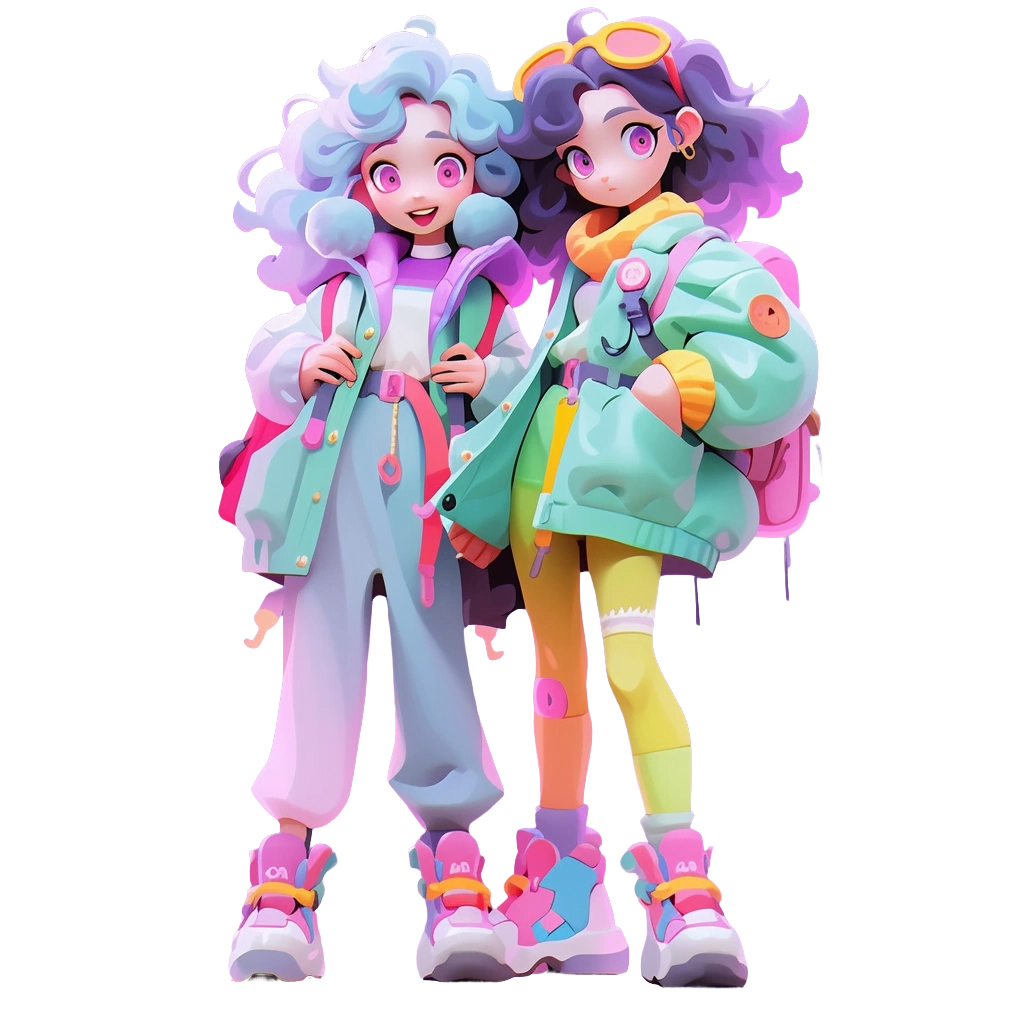
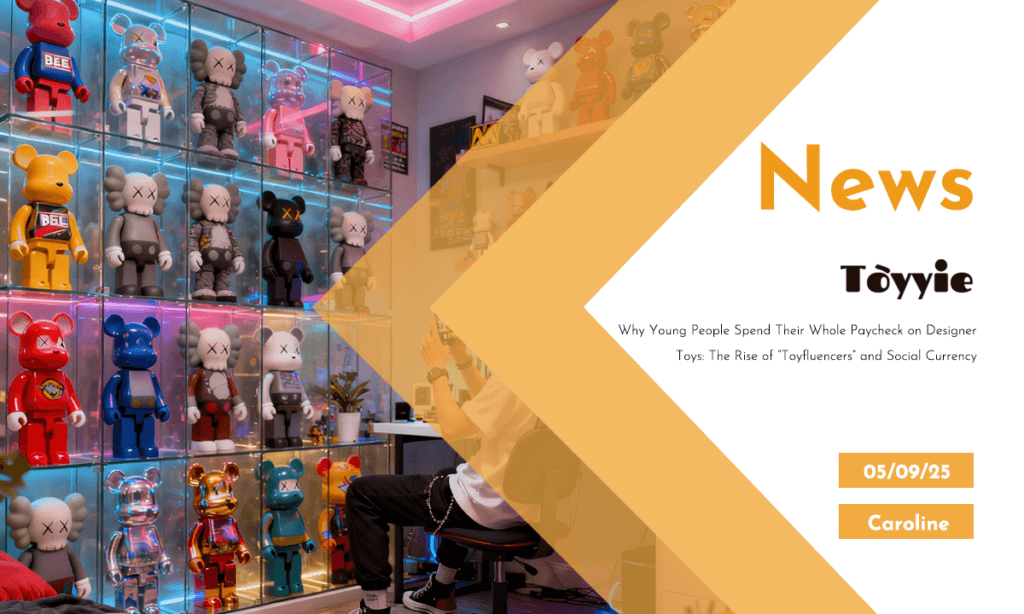
🧸 The Technical Rise of Designer Toys: Explore the evolution of designer toys as status symbols and social currency, driven by advanced manufacturing processes and innovative design tailored for digital-age collectors.
At TOYYIE, a leading premium OEM/ODM toy manufacturer in China, we have observed the transformative growth of designer toys as more than mere collectibles. This trend represents personal identity and community engagement through expertly crafted, limited-edition products.
Designer Toys and Social Currency: Understanding the Phenomenon 🧩
| Material Type | Production Method | Typical Size (cm) | Compliance Standard |
|---|---|---|---|
| PVC | Injection Molding | 10-30 | EN71, ASTM F963 |
| Vinyl | Rotational Molding | 15-40 | ISO 8124 |
| Resin | Casting | 5-25 | ASTM F963 |
| Epoxy | Hand Pouring | 8-20 | EN71 Part 3 |
| ABS | Injection Molding | 12-35 | ISO 8124-3 |
The Role of Social Currency in Designer Toy Manufacturing
Social currency in the context of designer toys refers to the perceived social value derived from ownership and display within niche communities. TOYYIE integrates this concept by collaborating with artists to produce limited edition collectibles that emphasize exclusivity and identity-driven design.
TOYYIE Insight: TOYYIE ensures all PVC and ABS toys comply with EN71 Part 1-3 and ASTM F963 standards, including phthalate-free plasticizers and lead-free paints, maintaining safety for global markets.
Design Considerations for Shareability and Visual Impact
Effective toy design for digital platforms demands bold silhouettes, high contrast colors, and interactive details. These elements enhance photogenic qualities under varied lighting conditions, promoting viral social media engagement.
Advanced Manufacturing Techniques at TOYYIE
TOYYIE employs precise injection molding, rotational molding, and hand-painted finishing processes to achieve superior detail fidelity. Quality control protocols ensure consistent compliance with EN71 and ASTM F963 safety standards.
Prototyping and Quality Assurance
Pre-production prototypes created via 3D printing allow for early detection of design flaws. TOYYIE advises conducting small-scale test runs to optimize paint application and assembly, ensuring market-ready products meet stringent quality benchmarks.
Packaging Innovation as a Marketing Tool
Packaging is engineered not only for protection but to enhance the unboxing experience. TOYYIE utilizes custom-branded packaging with UV-reactive inks and embedded storytelling to elevate emotional appeal and drive shareability on social platforms.
TOYYIE’s Manufacturing Capabilities for Designer Toys
- Precision Molding: Advanced injection and rotational molding for complex geometries
- Custom Paint Applications: Pantone color matching and UV-reactive finishes
- Small Batch Production: Agile runs for limited editions and test batches
- 3D Prototyping: Rapid iteration with high-fidelity 3D printed samples
- Quality Control: Multi-stage inspections ensuring compliance with EN71 and ASTM standards
TOYYIE — Your Partner in Premium Designer Toy Manufacturing
Leverage our comprehensive OEM/ODM expertise to bring your custom collectible toy designs to life with uncompromising quality and industry-certified safety.
Contact TOYYIE for a Consultation →