📌 Introduction📌
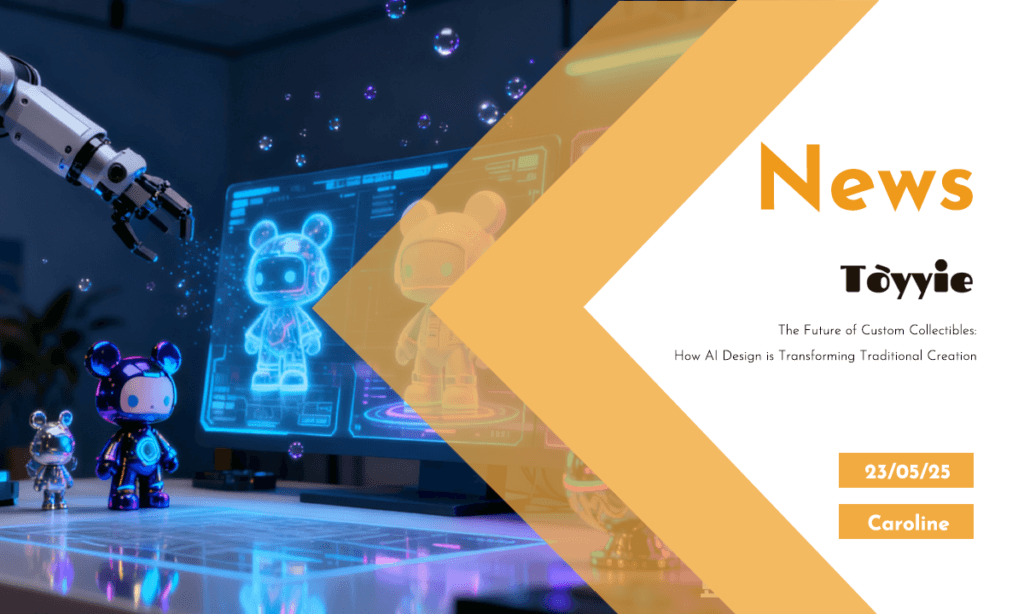
Imagine this scenario: You’re sitting at your desk, sketching out a rough design for a custom collectible—a futuristic vinyl figure inspired by your favorite sci-fi epic. In the past, turning that idea into reality might have required weeks of tweaking designs or even hiring a professional artist to bring it to life. But today, things are very different. All you need to do is describe your concept to an artificial intelligence (AI) tool, and within seconds, a highly detailed 3D model appears on your screen, complete with intricate details and customizable features. Sounds like something straight out of a sci-fi movie? In fact, this is already a reality in the world of custom collectibles.
Over the years, advancements in technology have continuously propelled the collectibles industry forward. From hand-carved prototypes to digital modeling tools, each innovation has made the creative process more efficient and versatile. Now, the arrival of artificial intelligence has completely transformed the game. Not only does it drastically reduce the time from concept to finished product, but it also blurs the line between creativity and reality, making personalized designs more accessible than ever.
In this article, we’ll explore how artificial intelligence is reshaping the world of custom collectibles, streamlining the design process, enhancing efficiency, and offering creators unprecedented freedom. Whether you’re a collector looking to craft unique pieces or a brand aiming to optimize production, understanding the role of AI in this space is essential. Moving forward, we’ll delve into how this technology is revolutionizing the industry and uncover the potential it holds for the future.
The Rise of AI in Creative Industries 🎨
Artificial intelligence isn’t just about robots assembling cars or chatbots answering customer queries—it’s also transforming creative fields like art, music, and now, toy design. Over the past few years, AI has evolved from a niche technology to a mainstream tool that empowers creators across industries.
Take graphic design, for example. Platforms like Canva and Adobe Firefly now integrate AI-driven features that allow users to generate logos, illustrations, and layouts with minimal effort. Similarly, in the gaming world, AI algorithms help developers build immersive environments and dynamic characters in record time. So why should the collectibles industry be any different?
AI’s entry into toy design marks a seismic shift in how we approach creativity. Instead of relying solely on human intuition and manual labor, designers can now leverage machine learning to experiment with shapes, textures, and colors at lightning speed. For collectors and brands alike, this opens up exciting opportunities to push the boundaries of what’s possible.
But what does this mean for traditional creation methods? Are they becoming obsolete? Not quite. Think of AI as a collaborator rather than a replacement. While machines excel at processing data and generating ideas, humans still bring emotion, storytelling, and cultural context to the table—elements that no algorithm can replicate. The result? A powerful synergy that enhances both efficiency and originality.
How AI-Powered Tools Work in Collectible Design ⚙️
So, how exactly does AI fit into the process of creating custom collectibles? Let’s break it down step by step:
Conceptualization Made Easyv
Traditionally, designing a collectible starts with brainstorming sketches or mood boards. This phase often involves trial and error, especially if you’re trying to visualize complex concepts. With AI, however, all you need is a clear description—or even a rough doodle—and the system generates multiple variations based on your input.
For instance, platforms like Runway ML and MidJourney use generative adversarial networks (GANs) to produce high-quality renders from text prompts. Want a retro-inspired robot with neon accents? Type it in, and voilà—an array of options appears within seconds.💡
Precision Modeling Without the Learning Curve
Once you’ve settled on a concept, the next step is translating it into a 3D model. Traditionally, this required expertise in programs like Blender or ZBrush—tools that can take months to master. Today, AI-powered modeling software simplifies this process dramatically.
Tools like Shapr3D and Autodesk Fusion 360 incorporate AI assistants that guide users through complex tasks, such as smoothing curves or optimizing geometry. Even beginners can achieve professional-grade results without needing years of training.
Real-Time Customization and Feedback
One of the most exciting aspects of AI in collectible design is its ability to facilitate real-time customization. Imagine uploading a base template of a figurine and using sliders to adjust proportions, textures, or color schemes instantly. Need to tweak the pose or add accessories? AI algorithms adapt accordingly, ensuring seamless adjustments every step of the way.
This level of interactivity not only saves time but also allows for greater experimentation. Creators can test countless iterations without worrying about wasted materials or costly mistakes—a game-changer for small-scale producers and independent artists.
Streamlined Production Planning
After finalizing the design, the next hurdle is turning it into a physical product. Here too, AI plays a crucial role. Advanced manufacturing systems powered by AI optimize everything from material usage to assembly line efficiency. For example, 3D printing farms equipped with AI scheduling tools can prioritize orders, reduce waste, and ensure consistent quality—all while keeping costs low.
Brands can also use predictive analytics to forecast demand and adjust inventory levels accordingly. By analyzing trends and consumer preferences, AI helps prevent overproduction and ensures that limited-edition releases remain exclusive.📊
Real-World Applications of AI in Collectible Design 🌟
To better understand the impact of AI, let’s look at some real-world examples where smart design is already making waves:
Case Study 1: Customizable Vinyl Figures by XYZ Studios
XYZ Studios recently launched a platform that lets customers design their own vinyl figures using AI assistance. Users upload reference images or provide text descriptions, and the system generates a range of prototype designs. Once finalized, the figures are 3D printed and shipped directly to buyers.
What sets this initiative apart is its accessibility. Even those with zero artistic background can participate in the creative process, democratizing access to custom collectibles. Plus, the use of AI ensures rapid turnaround times—a major advantage in today’s fast-paced market.
Case Study 2: AI-Generated NFT Toys
While physical collectibles dominate the industry, digital assets like NFTs are gaining traction. Brands like Cryptoys have embraced AI to create interactive virtual toys that evolve based on user interactions. These digital companions come with customizable traits and abilities, allowing owners to shape their personalities over time.
By blending blockchain technology with AI, companies are creating hybrid experiences that appeal to tech-savvy collectors. The best part? Each item remains verifiably unique, thanks to smart contracts embedded in the NFT code.🖥️
Case Study 3: Sustainable Toy Manufacturing
Sustainability is a growing concern in the toy industry, and AI is helping address this challenge head-on. Companies like GreenToys Inc. use AI-driven simulations to identify eco-friendly materials and optimize production processes. For example, AI can analyze the carbon footprint of different plastics and recommend alternatives made from recycled sources.
Moreover, AI enables brands to offer modular designs that extend the lifespan of products. Instead of discarding an entire toy when one part breaks, consumers can simply replace the damaged component—a win-win for both wallets and the planet.🌱
Challenges and Ethical Considerations ⚠️
Of course, no technological advancement comes without challenges. As AI becomes more integrated into the design process, several ethical questions arise:
Ownership and Originality
Who owns the rights to an AI-generated design—the user who provided the input, the company operating the platform, or the algorithm itself? This gray area complicates intellectual property laws and raises concerns about plagiarism.
Job Displacement
Automation has long been a double-edged sword, and the rise of AI in design is no exception. While it streamlines workflows, there’s a risk of displacing skilled artisans and traditional craftsmen. Striking a balance between innovation and preserving heritage techniques will be critical moving forward.
Bias in Algorithms
AI systems are only as unbiased as the data they’re trained on. If datasets lack diversity or reflect outdated stereotypes, the resulting designs may perpetuate harmful narratives. Ensuring inclusivity and fairness in AI development is essential to avoid alienating certain audiences.
Despite these hurdles, the benefits of AI far outweigh the drawbacks—if implemented responsibly. Transparency, accountability, and ongoing dialogue between stakeholders will pave the way for a balanced future.✅
Why You Should Care About AI in Collectibles 🤔
If you’re reading this, chances are you’re either a fan of custom collectibles or someone interested in leveraging them for business purposes. Either way, understanding AI’s role in this space is crucial for staying relevant.
For collectors, AI offers unparalleled freedom to express individuality. No longer bound by mass-market offerings, you can create pieces that truly resonate with your personality and values. Whether it’s a plush toy modeled after your pet or a futuristic action figure inspired by your favorite book series, the possibilities are endless.
For brands, AI represents a golden opportunity to innovate and engage customers in new ways. By offering personalized products and streamlined services, companies can differentiate themselves in a crowded marketplace. Additionally, AI-driven insights enable smarter marketing strategies, ensuring that campaigns hit the mark every time.
Ultimately, AI isn’t just changing how we make toys—it’s changing why we make them. It’s shifting the focus from passive consumption to active participation, empowering individuals to become co-creators in the artistic process.
Looking Ahead: What Lies Beyond the Horizon? 🔭
As AI continues to evolve, so too will its applications in the realm of custom collectibles. Augmented reality (AR) integration, for example, could allow users to preview designs in their living rooms before committing to a purchase. Meanwhile, advancements in biometric scanning might enable hyper-realistic avatars that mimic real people down to the smallest detail.
Perhaps most intriguingly, AI could foster entirely new forms of collaboration. Picture a global community of creators pooling resources and ideas via decentralized platforms, powered by blockchain and AI. Together, they could produce groundbreaking works that transcend geographical and cultural barriers.
The bottom line? We’re standing on the brink of a creative revolution—one where technology amplifies human ingenuity rather than replacing it.
Final Thoughts: Embracing the AI Revolution 🚀
There’s no denying that AI is reshaping the landscape of custom collectibles. From accelerating design timelines to enabling unprecedented levels of personalization, its impact is undeniable. Yet, at its core, this transformation isn’t about machines taking over—it’s about empowering people to dream bigger and bolder than ever before.
Whether you’re a seasoned designer or a curious newcomer, now is the perfect time to explore what AI has to offer. Start small, experiment fearlessly, and don’t be afraid to ask questions along the way. After all, the future belongs to those willing to embrace change.
Got thoughts on AI and its role in the collectibles industry? Share them below—I’d love to hear your perspective!