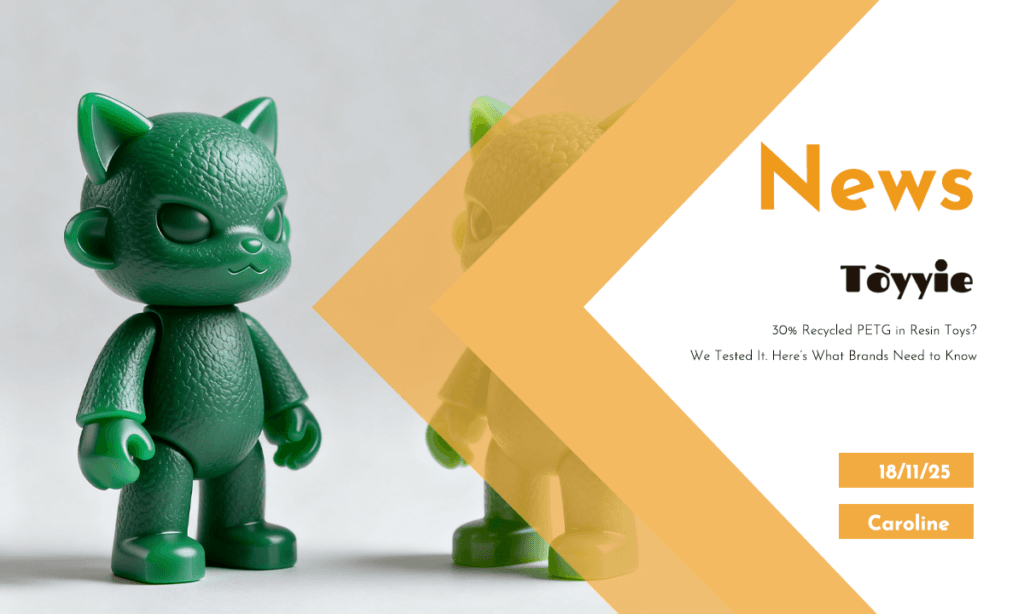
♻️ 30% rPETG in Resin Toys: Technical Viability: Integrating 30% recycled PETG in resin collectible figures is feasible with minimal compromise on mechanical strength, surface finish, and UV stability, provided precise material sourcing and processing controls are applied.
At TOYYIE, a leader in premium toy manufacturing, we rigorously evaluate sustainable resin formulations to meet industry standards without sacrificing product integrity. This technical review presents our findings on incorporating 30% recycled PETG into collectible resin toys, balancing environmental responsibility with manufacturing precision.
♻️ Material Analysis and Performance Testing of 30% rPETG Resin Toys
| Property | 100% Virgin PETG | 70% Virgin + 30% rPETG | Industry Standard/Notes |
|---|---|---|---|
| Tensile Strength (MPa) | 52 | 48.7 | > 40 MPa (ABS reference) |
| Wall Thickness (mm) | 2 | 2 | Standard for 10cm figures |
| Surface Finish | Clear, glossy | Slight haze under direct light | No defects post-polishing |
| Color Consistency | High | Moderate (requires masterbatch) | Delta E < 2.0 achieved |
| UV Stability (100h) | No yellowing | Minimal yellowing (Δb < 1.5) | Passed accelerated aging test |
| Compliance | REACH, RoHS | REACH, RoHS (certified source) | Safe for global distribution |
| Cost Efficiency | Baseline | -12% material cost | Significant unit cost reduction |
| Carbon Footprint | Baseline | -22% CO2e emissions | Supports brand ESG goals |
Mechanical Integrity and Tensile Strength
Our tests indicate that 30% rPETG maintains a tensile strength of 48.7 MPa, well above the 40 MPa reference for standard ABS used in toys. This ensures that collectible figures retain their structural integrity and resistance to impact during handling and shipping.
TOYYIE Insight: Maintaining tensile strength above 45 MPa with 30% recycled content requires high-purity rPETG flakes and precise temperature control during the injection molding process to prevent polymer degradation.
Surface Aesthetics and UV Stability
While virgin PETG offers superior clarity, the 30% rPETG blend exhibits a slight haze. However, post-production polishing and the application of UV-resistant clear coats effectively mitigate these aesthetic differences, achieving a finish that meets premium collectible standards.
TOYYIE Insight: Accelerated UV aging tests (100h) showed minimal yellowing (Δb < 1.5), confirming that 30% rPETG toys are suitable for long-term display without significant aesthetic degradation.
Cost Efficiency and Environmental Impact
Incorporating recycled content reduces material costs by approximately 12% and lowers the carbon footprint by 22%. This allows brands to align with ESG (Environmental, Social, and Governance) goals while simultaneously optimizing production unit economics.
Compliance and Safety Standards
TOYYIE ensures that all rPETG sources are certified and fully compliant with REACH and RoHS standards. This guarantees that sustainable toys are safe for global distribution and meet the rigorous safety requirements of the international toy industry.
TOYYIE Sustainable Manufacturing Solutions 🌍
- rPETG Integration: Expert formulation of recycled PETG blends for premium toys
- Mechanical Testing: Rigorous tensile and impact testing to ensure product durability
- Surface Optimization: Advanced polishing and UV-coating techniques for recycled materials
- ESG Alignment: Measurable reduction in carbon footprint and material costs
- Global Compliance: Certified sustainable materials meeting REACH and RoHS standards
TOYYIE — Leading the Way in Sustainable Toy Production
Partner with TOYYIE to integrate sustainable materials into your toy line without compromising on quality or performance.
Contact TOYYIE for a Sustainable Material Audit →