📌 Introduction📌
From Cuddly to Conversational: The Rise of AI-Integrated Plush Toys
Back in 2012, plush toys were simple — soft fabric, stuffing, and maybe a squeaker.
Fast forward to 2025 — and plush toys are starting to talk back.
Welcome to the age of **AI-powered plushies** — soft toys that can recognize your child’s voice, tell stories, respond to touch, and even teach basic coding or language skills.
As a toy factory owner who’s helped bring both traditional plush toys and smart toys to life, I’ve seen firsthand how the market is shifting.
In this post, I’ll share:
– What makes a plush toy “AI-powered”
– How these toys work behind the scenes
– Real-world product reviews
– What we’ve learned from developing smart plush toys
– And whether these toys are actually valuable for education and emotional development
Let’s dive in.
🧠 What Exactly Is an AI Plush Toy?
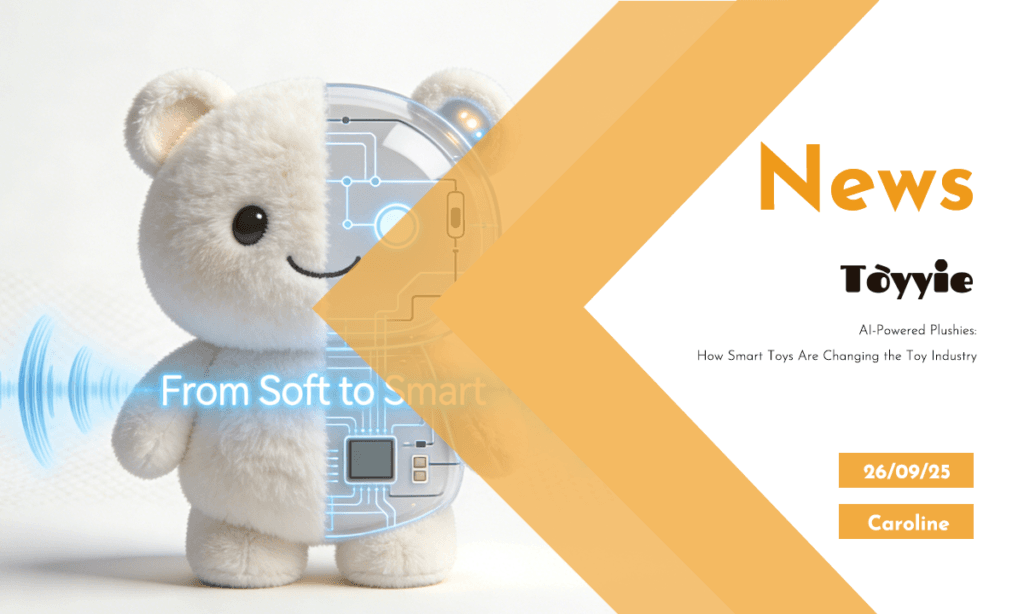
An AI plush toy is a soft, cuddly toy that uses **artificial intelligence and embedded tech** to interact with users.
These toys can:
– Recognize and respond to **voice commands**
– Use **facial recognition** (if equipped with a camera)
– Connect to **Wi-Fi or Bluetooth**
– Play music, tell stories, or guide **learning sessions**
– Express “emotions” through lights, sounds, or movement
Some even support **AR/VR integrations**, where kids can scan the toy with a phone or tablet and see a 3D animated version of it in the real world.
From a manufacturing perspective, these toys are **much more complex than traditional plushies**. They require:
– Miniature microchips and sensors
– Rechargeable batteries
– Durable, child-safe materials
– Careful placement of electronics inside plush bodies
🔧 How Do AI Plush Toys Work?
Let’s break it down into the main components:
1. **Voice Recognition & Response (NLP)**
Most AI plush toys use **Natural Language Processing (NLP)** — the same tech behind Alexa and Google Assistant — to understand what kids are saying.
> Example: A child says, “Tell me a story about space,” and the toy responds with a pre-recorded or AI-generated story.
2. **Emotion Simulation**
Some toys simulate emotions through:
– LED eyes that change color
– Voice tone shifts (happy, sleepy, sad)
– Movement (like tilting the head or wagging a tail)
This helps create a **sense of companionship**, especially for children who may feel lonely or need emotional support.
3. **AR/VR Integration**
Some plush toys come with **AR companion apps** — point your phone at the toy, and it “comes to life” in 3D.
> Pro tip: If you’re planning to integrate AR, make sure the app is easy to use and doesn’t require constant updates — otherwise, parents will lose patience fast.
🧸 Real-World Examples: AI Plushie Products We’ve Seen or Tested
Let’s take a look at some of the most interesting AI-powered plush toys currently on the market — or in development.
1. **CogniToys Dino by Elemental Path**
One of the early pioneers in AI plush toys.
– Uses IBM Watson to answer questions
– Learns about the child’s interests over time
– Talks, tells jokes, and adapts to the child’s age
We tested this toy in our office — and it was impressive how it remembered names and asked follow-up questions.
2. **Pai Bot by Pai Technology**
A plush robot that teaches kids coding basics through play.
– Drag-and-drop coding interface
– Responds to light, sound, and touch
– Designed for kids as young as 5
We worked with a similar concept and found that **kids loved the interactive learning** — especially when they could “program” the plush to do something silly.
3. **Our Own AI Plush Prototype**
We recently helped develop a custom AI plush toy for a startup client.
– Uses offline voice recognition
– Has LED eyes and a soft, washable body
– Responds to touch and can tell bedtime stories
– Comes with an AR app that shows the plush in 3D
It’s still in testing, but early feedback from parents has been great — especially around how **comforting** the toy feels to kids at bedtime.
🧪 What We’ve Learned from Making AI Plushies
We’ve made hundreds of plush toys — but making AI-powered ones has been a whole new challenge.
Here’s what we’ve learned:
✅ Keep It Simple
Don’t over-engineer the toy. The more buttons, settings, and updates it requires, the less likely parents are to use it.
Stick to **1–2 core functions** — like storytelling or emotion-based responses.
✅ Durability Is Key
Kids drop, chew, and throw toys — especially plush ones.
We always recommend:
– Reinforced seams
– Water-resistant inner linings
– Secure battery compartments
> Factory tip: Always test the toy with real kids before mass production — you’ll find flaws no lab can catch.
✅ Privacy Matters
Many parents are worried about data collection — especially with toys that record voice.
If your toy uses voice recognition, make sure it:
– Stores data securely
– Allows offline use
– Gives parents control over what’s recorded
We always advise our clients to be **transparent about data policies** — and avoid cloud-only models unless absolutely necessary.
🧠 Educational & Emotional Value: Do These Toys Actually Help?
This is the big question.
Are AI plush toys just gimmicks — or do they actually help kids learn and grow emotionally?
✅ Educational Benefits:
– Encourages curiosity and exploration
– Introduces basic coding, math, or language concepts
– Offers interactive storytelling and memory games
– Supports self-paced learning
We’ve seen kids as young as 4 learn to ask questions in English through AI plush toys — just because they wanted to “talk” to the toy.
✅ Emotional Support:
– Reduces loneliness for kids without siblings or regular social interaction
– Provides comfort during bedtime or stressful times
– Helps children with autism or anxiety practice social skills
One of our clients tested their AI plush with kids in special education programs — and reported that some children who rarely spoke began to **initiate conversations** with the toy.
🛠️ Tips for Brands & Creators Looking to Launch an AI Plush Toy
If you’re thinking about launching your own AI-powered plush toy — whether as a brand, indie creator, or educator — here’s what we recommend:
1. **Start Small, Test Fast**
Don’t spend a fortune on a full-scale prototype right away.
Start with:
– A basic voice module
– One or two interactive features
– A soft body that’s easy to mass-produce
Once you validate the idea with users, you can add more features.
2. **Partner with the Right Factory**
AI plush toys are not like regular plushies.
Make sure your factory:
– Has experience with electronics integration
– Understands child safety regulations (like EN71 and ASTM F963)
– Can handle small-scale testing before full production
We’ve seen too many projects fail because the electronics were too fragile or the plush body was poorly stitched.
3. **Focus on the “Human” Side**
AI is powerful — but it’s not magic.
The best AI toys are the ones that feel:
– Like a friend
– Responsive to the child’s personality
– Comforting, not just functional
If yes — you’re on the right track.
📈 Final Thoughts: The Future of Plushies Is Smart — But Still Soft
AI is transforming the toy industry — and plush toys are no exception.
From voice-activated storytelling to AR-powered adventures, smart plushies are becoming more than just toys — they’re **companions, educators, and comforters**.
And for manufacturers like us? It’s an exciting time.
We’re no longer just sewing fabric — we’re building **interactive experiences** that live in the softest, most approachable form: a plush toy.
Because the future of play is smart.
But it’s still soft.
💬 **Got questions about making your own AI-powered plush toy?**
Drop a comment below or send me a message — I’ve helped bring dozens of plush toys to life, and I’d love to help you avoid the same mistakes I made.
Let’s build the future — one plush at a time.
📌 **Hashtags:**
#AIPlushToys #SmartToys #InteractiveToys #EducationalToys #EmotionalCompanions #ToyInnovation #PlushToyDesign #ToyManufacturing #EdTechToys #ChildDevelopment #AIForKids #ToyStartup #FutureOfPlay #AICompanion #ARPlushToys #AIInToys #ToyTech