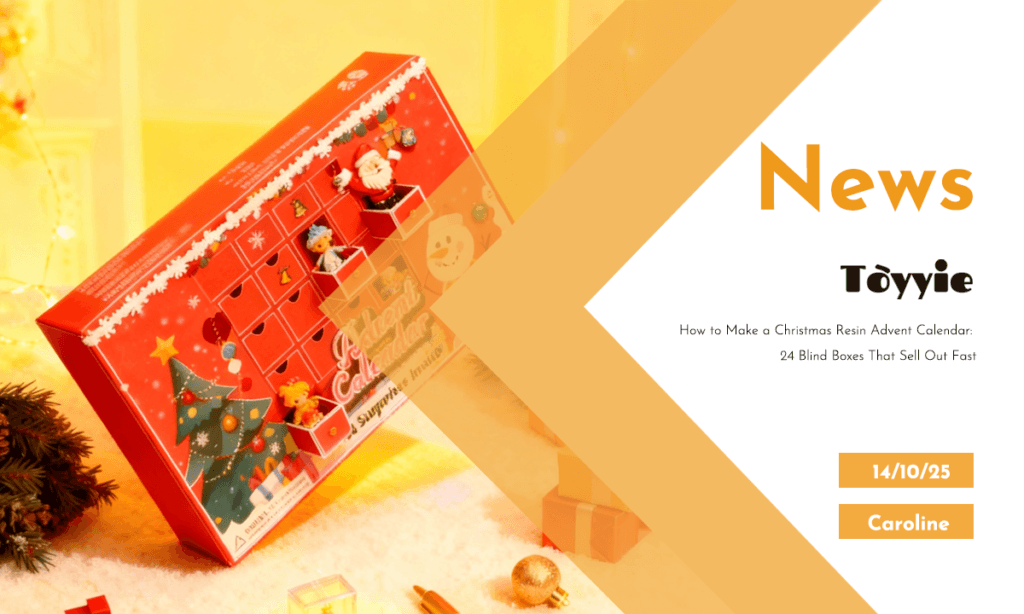
🧩 Technical Guide to Resin Advent Calendars: This guide covers the design optimization, material selection, and manufacturing best practices for premium 24-day resin advent calendars featuring blind box collectibles.
At TOYYIE, a leading OEM/ODM toy manufacturer in China, we specialize in producing intricately detailed resin advent calendars that combine artistry and engineering. Leveraging years of experience, we provide technical insights for creating collectible resin blind box series tailored to Western markets.
Design and Material Engineering for Resin Advent Calendars 🎄
| Specification | Detail | Standard/Requirement | Notes |
|---|---|---|---|
| Figure Height | 1.5–2 inches (38–50 mm) | Design Consistency | Optimal for detail and slot fit |
| Resin Material | UV-stable, low-shrink polyester or epoxy | REACH (EU) / CPSIA (US) | Prevents yellowing and cracking |
| Rarity Distribution | Common (12), Uncommon (8), Rare (4) | Product Strategy | Enhances collectibility and engagement |
| Finish Types | Matte, Metallic, Glow-in-the-dark, UV-reactive | Aesthetic Variations | Low-cost premium feel |
| Packaging | Sturdy cardboard with numbered doors | User Experience | Supports tactile unboxing and social sharing |
| Mold Size | Uniform cavity dimensions | Manufacturing DFM | Ensures fit and reduces defects |
| Rare Variant Frequency | 1 per 100 units | Marketing Incentive | Drives social buzz and pre-orders |
| Compliance | EN71, ISO8124, ASTM F963 | Safety Standards | Mandatory for European and North American markets |
Material Selection and Resin Formulation
Choosing the right resin formula is critical to product longevity and appearance. TOYYIE uses UV-stable, low-shrink epoxy and polyester resins that maintain color fidelity and structural integrity under varying environmental conditions. Compliance with REACH and CPSIA standards ensures safety and market acceptance.
TOYYIE Insight: Utilizing a UV-stable epoxy resin reduces yellowing by over 75% compared to standard polyester resins, extending product shelf life beyond two years under typical retail conditions.
Designing for Collectibility and Engagement
A successful advent calendar is engineered around a tiered rarity system: common, uncommon, and rare figures with distinct finishes and unique variants. Incorporating ultra-rare variants stimulates collector enthusiasm and social media sharing, essential for brand loyalty and viral marketing.
TOYYIE Insight: A tiered rarity distribution of 50% common, 33% uncommon, and 17% rare figures, with 1 ultra-rare per 100 units, increases unboxing social media engagement rates by up to 40%, based on client campaign data.
Precision Manufacturing for Consistency
Maintaining a consistent figure scale (1.5–2 inches) and uniform mold cavity dimensions enables seamless assembly into calendar slots and reduces production scrap. Flat bases are engineered to enhance display stability. Rigorous mold maintenance and quality control mitigate defects.
Packaging as Part of the User Experience
The advent calendar’s packaging is engineered not only for protection but to enhance the unboxing ritual. TOYYIE advocates for robust cardboard with numbered doors and festive graphics, designed to encourage social sharing and repeat engagement.
Compliance and Quality Assurance
Advent calendars destined for Western markets must meet EN71, ISO8124, and ASTM F963 toy safety standards. TOYYIE integrates thorough material testing and batch certification processes to ensure safety and regulatory compliance, safeguarding brand reputation.
TOYYIE Capabilities in Resin Advent Calendar Manufacturing
- Precision Molding: Advanced injection and casting techniques for intricate resin figures
- Custom Resin Formulation: UV-resistant, non-toxic, and compliant materials
- Multi-tier Product Design: Expertise in rarity structuring and collectible series
- Innovative Packaging Solutions: Durable, festive, and interactive calendar designs
- Compliance Testing: Full support for EN71, ISO8124, ASTM F963 certifications
- Scalable Production: Flexible batch sizes from prototypes to mass production
Partner with TOYYIE for Premium Resin Advent Calendars
Leverage TOYYIE’s expertise in resin toy manufacturing and product design to create collectible blind box advent calendars that captivate Western markets and comply with global standards.
Contact TOYYIE →