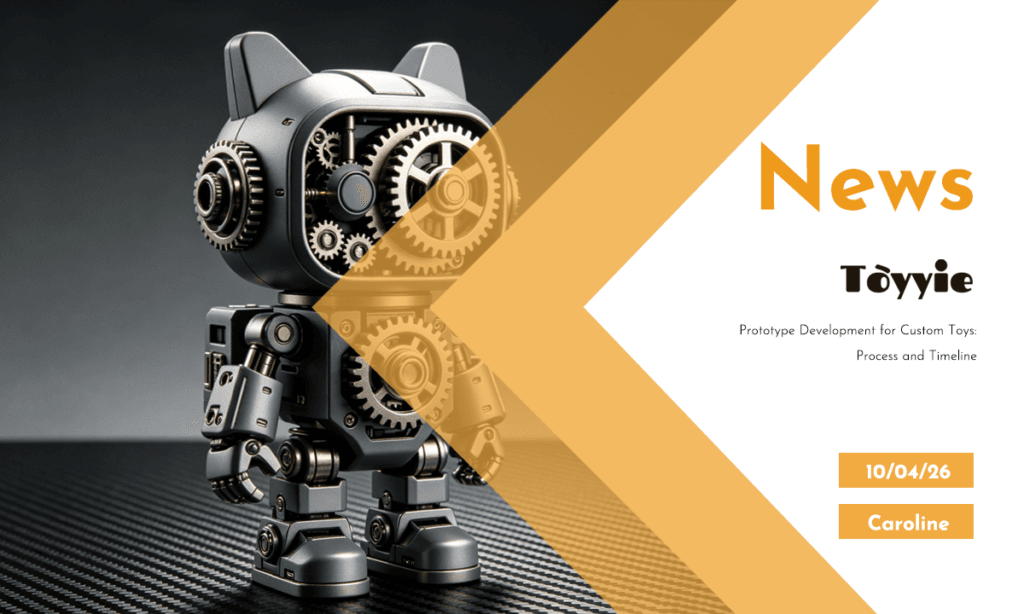
Technical Summary: Prototype development is the most critical phase in the custom toy lifecycle, bridging the gap between digital art and mass production. In 2026, the integration of High-Resolution SLA (±0.02mm), MJF (Multi-Jet Fusion), and Vacuum Casting (Silicone Molds) allows for retail-ready samples in as little as 2–4 weeks. Mastering the transition from a “Golden Sample” to a DFM-optimized mold design is essential to avoid costly production errors and ensure compliance with ASTM F963 and EN 71 standards.
Why Prototyping is the “Soul” of Your Toy Project
- Validate Aesthetics: Check proportions, facial expressions, and “shelf presence.”
- Verify Engineering: Test joint articulation, snap-fit tolerances, and weight balance.
- Audit Safety: Identify potential “Choking Hazards” or “Sharp Points” before committing to $20,000 in steel tooling.
- Secure Funding: Use a “Master Paint Sample” for Kickstarter campaigns, investor pitches, or retail buyer presentations.
In 2026, the cost of skipping a professional prototype is 10x higher than the cost of making one. A single design flaw discovered during mass production can lead to a total project failure.
1. The 5 Stages of Prototype Development
Stage 1: Concept & 2D Design (1 Week)
- The Goal: Define the character’s “DNA.”
- Deliverable: 3-view orthographic drawings (Front, Side, Back) with specific Pantone (PMS) color callouts.
- Technical Tip: Ensure the 2D design accounts for “Parting Lines” early on to simplify future mold design.
Stage 2: 3D Modeling & Digital Sculpting (1–2 Weeks)
- The Goal: Translate art into a 3D manifold mesh.
- Tools: ZBrush for organic characters; SolidWorks or Rhino for mechanical/articulated parts.
- DFM Check: During this stage, Toyyie’s engineers perform a “Digital Audit” for wall thickness (1.5mm–3.0mm) and draft angles (1°–3°).
Stage 3: Physical Prototyping (3D Printing) (3–5 Days)
- The Goal: Hold the design in your hands.
- 2026 Technology:
- SLA (Stereolithography): The gold standard for high-detail figurines. Accuracy up to ±0.02mm.
- MJF (Multi-Jet Fusion): Best for functional, “play-ready” prototypes with high durability.
- SLS (Selective Laser Sintering): Ideal for complex, interlocking parts without the need for support structures.
Stage 4: Functional Testing & Refinement (1 Week)
- The Goal: Break the prototype before the customer does.
- Tests: Drop tests, joint “stress tests,” and assembly fitment checks.
- Iteration: Most professional projects require 1.5 to 2.0 rounds of physical refinement to reach perfection.
Stage 5: The “Golden Sample” (Master Paint) (1 Week)
- The Goal: The final reference for mass production.
- Process: A 3D-printed model is sanded, primed, and hand-painted by master artists to represent the exact final product. This sample is used for AQL (Acceptable Quality Level) comparisons during the production run.
2. Prototyping Methods: Cost and Time Comparison (2026)
Choosing the right technology depends on your budget and the complexity of your design.
| Method | Accuracy | Material Feel | Setup Cost | Lead Time | Best For |
|---|---|---|---|---|---|
| SLA 3D Printing | ±0.02mm | Smooth, Resin | $150 – $500 | 3 Days | High-detail figurines, statues. |
| CNC Machining | ±0.01mm | Real Plastic (ABS/PC) | $500 – $1,500 | 7 Days | Functional joints, clear parts. |
| Vacuum Casting | ±0.10mm | Production-grade PU | $400 – $1,200 | 10 Days | Small test runs (10–50 units). |
| Hand Sculpting | Subjective | Clay/Wax | $1,000+ | 14+ Days | Traditional “Art Toys” feel. |
3. The Transition: From Prototype to Mass Production
The most dangerous phase of a toy project is the “Hand-off” from the prototype to the mold maker. At Toyyie, we ensure a seamless transition through:
- Mold Flow Simulation: We use the final 3D prototype data to simulate how plastic will flow into the steel mold, identifying “Air Traps” or “Sink Marks” before they happen.
- Tooling Optimization: We decide whether to use Aluminum Molds (for 500–2,000 units) or Steel Molds (for 10,000+ units) based on the prototype’s complexity.
- Pilot Run (T1 Samples): The first 50 units off the real mold are compared against the “Golden Sample” to ensure 100% fidelity.
4. Common Prototyping Pitfalls to Avoid
- Over-Detailing for the Process: Designing 0.05mm textures that the Injection Molding process cannot replicate.
- Ignoring Material Shrinkage: Not accounting for the 0.5% – 2.0% shrinkage that occurs when hot plastic cools in a mold.
- Fragile Joints: Designing “Ball Joints” that look good in 3D but snap instantly in the real world due to material fatigue.
- Scale Errors: Not verifying the “In-Hand” feel. A 6-inch figure can feel “too small” or “too bulky” once it’s physical.
5. Why Choose Toyyie for Prototype Development?
At Toyyie, we don’t just “print a file.” We engineer a Manufacturing Asset.
- In-House 3D Lab: Equipped with the latest 2026 SLA and MJF printers for rapid 48-hour turnaround.
- Engineering-First Approach: Every 3D model is reviewed by a DFM Expert with 10+ years of mold-making experience.
- Transparent Pricing: We provide a flat-fee prototyping package that includes 3D modeling, printing, and a master paint sample.
- IP Security: All digital files are protected by our Digital Asset Erasure protocol post-production.
Manufacturing Compliance & IP Protection
Prototype development is the first line of defense for your IP.
- NDA Enforcement: We sign a comprehensive Non-Disclosure Agreement before a single file is uploaded.
- Safety Pre-Audit: We check your prototype against ASTM F963 and EN 71 standards to ensure it won’t fail lab testing later.
- Asset Ownership: You own the 3D files and the physical prototype—always.
Turn Your Sketch into a Masterpiece.
Upload your concept art today for a free technical evaluation and a professional prototyping quote.
References
- SLA vs. SLS vs. MJF: Choosing the Best 3D Printing Technology (2026)
- Custom Toy Manufacturing Roadmap: Concept to Delivery
- Vacuum Casting vs. Injection Molding: Cost and Lead Time Analysis
- ISO 9001:2015 Quality Management for Prototyping & R&D
- ASTM F963-23 Standard Consumer Safety Specification for Toy Safety