🧱 Definition and Materials
Sofubi
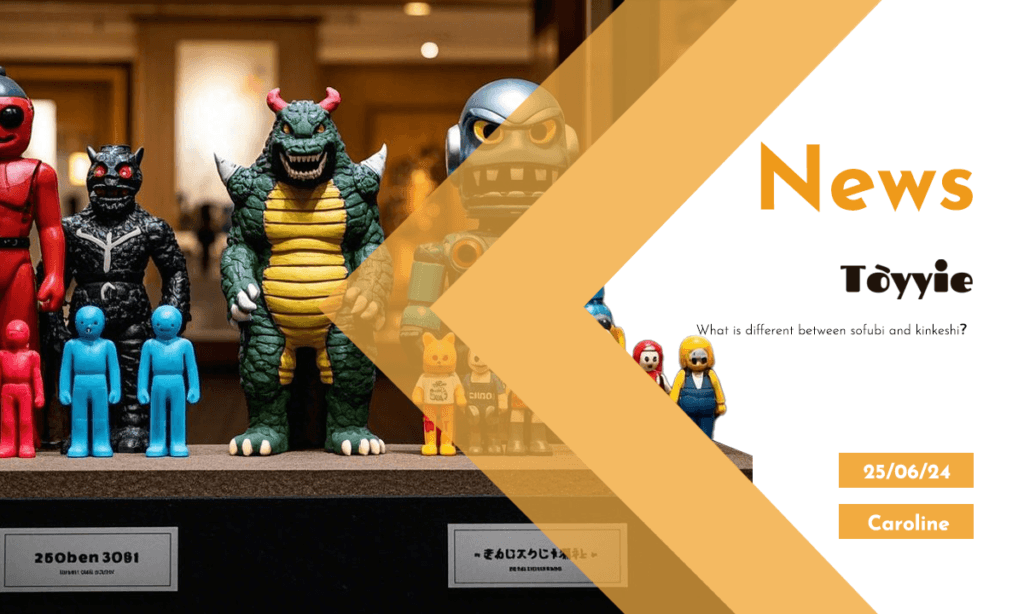
Sofubi refers to soft vinyl collectible figures made primarily from soft polyvinyl chloride (PVC). Originating in Japan, these figures often represent monsters, robots, and anime characters. Manufactured with an injection molding process, Sofubi toys possess a flexible yet durable texture, enabling intricate, dynamic designs that appeal to both collectors and toy enthusiasts.
Kinkeshi
Kinkeshi are small collectible figures originally crafted from rubber, inspired specifically by the characters from the Japanese manga and anime series Kinnikuman. The term “Kinkeshi” combines “Kinnikuman” with “keshigomu” (Japanese for eraser). Although early versions were rubber-made eraser-like toys, contemporary Kinkeshi figures may utilize various types of plastics. Their compact size emphasizes simplicity and playability.
🏛️ Historical Background
Sofubi
Sofubi toys emerged in the 1960s, developed by Japanese manufacturers aiming to capitalize on the booming popularity of sci-fi and kaiju (monster) genres. Quickly intertwined with kaiju culture, Sofubi figures like Godzilla became cultural icons and remain prominent in exhibitions and collections worldwide.
Kinkeshi
Kinkeshi gained popularity in the 1980s following the immense success of the Kinnikuman series. These eraser-like figures became a pop culture phenomenon among Japanese children and manga fans, securing their status as cherished collectibles throughout the decade.
🎨 Design and Appearance
Sofubi
Sofubi figures are generally larger, often ranging from 6 inches and above, featuring detailed craftsmanship. Usually hand-painted, their vibrant colors and unique variations highlight a high level of artistic skill. Characterized by exaggerated, cartoonish features, they appeal strongly to collectors who appreciate artistic expression.
Kinkeshi
Kinkeshi figures are smaller, typically about 2 inches tall, and present a minimalistic, monochromatic design—most commonly in flesh tones or pink. Despite simplicity, their poses and details distinctly capture Kinnikuman characters, making them instantly recognizable and easy to collect and trade.
🏷️ Cultural Significance
Sofubi
Beyond toys, Sofubi figures are regarded as collectible art pieces, symbolizing Japan’s deep-rooted fascination with kaiju and science fiction. Regularly showcased in art exhibitions and toy conventions, Sofubi embodies both artistic craftsmanship and pop culture heritage.
Kinkeshi
Kinkeshi figures evoke strong nostalgia for those who experienced 1980s Japanese youth culture. As playful, collectible items influenced by manga and anime, they continue to resonate with collectors and reflect an important era in Japanese pop culture history.
💰 Market and Collectibility
| Aspect | Sofubi | Kinkeshi |
|---|---|---|
| Price Range | Generally higher due to limited editions and artisanal production | More affordable and accessible for casual collectors |
| Availability | Often produced in limited runs, enhancing rarity | Wider availability, especially vintage sets sought after |
| Collector Appeal | Highly prized by art collectors and toy enthusiasts | Popular among fans of retro toys and Kinnikuman series |
🎮 Practical Uses
Sofubi
While playable, Sofubi toys are predominantly cherished as display art pieces. Their detailed, hand-painted surfaces make them more suitable for collectors looking to showcase Japanese toy artistry rather than for active play.
Kinkeshi
Originating as erasers, Kinkeshi figures quickly became popular as collectible toys. Their small size and durable material made them ideal for play, trade, and collection, especially for children during the 1980s.
🌟 Notable Artists and Manufacturers
Sofubi
Marusan: Pioneer of Sofubi toys, famously launching the first Godzilla Sofubi figure in 1966.
M1 Bullmark: Key manufacturer known for tokusatsu character Sofubi, including Godzilla and related monsters.
Bullmark: Influential in shaping the Sofubi market with its distinctive designs and collector-focused releases.
Chinese Sofubi Artists: Contemporary talent such as “Chairman of the Wipe,” “Artificial Human 22,” and “Dabomb toys” have advanced the art form internationally, gaining acclaim among collectors worldwide.
Kinkeshi
Bandai: Renowned manufacturer of Kinkeshi, responsible for producing the extensive Kinnikuman toy line and evolving the brand’s collectible figures.
Yudetamago: Creative duo behind the Kinnikuman manga characters that inspired the Kinkeshi craze.
These artists and manufacturers have been instrumental in growing Sofubi and Kinkeshi into global phenomena, blending pop culture with collectible art.
💬 Share Your Experiences
Have you collected or played with Sofubi or Kinkeshi figures? Share your favorite memories and prized collectibles in the comments below. Interested in starting your own collection? Explore local toy conventions or trustworthy online marketplaces to discover authentic and rare pieces. For deeper insights, check out our curated resources on Japanese toy culture.
Ready to Bring Your Vision to Life?
Contact TOYYIE today for expert toy manufacturing support.