📌 Introduction📌
If you’re in the art toy industry—especially if you’re trying to reach international markets like the U.S. or Europe—you’ve probably faced this challenge:
Why does my art toy sell well at first, but then disappear from shelves just as quickly?
I’ve been there myself. When I launched my own art toy brand a few years ago, we had great designs, strong packaging, and even some limited editions. But after the initial buzz faded, sales dropped fast.
That’s when I realized something important:
An art toy needs more than just a cool look—it needs a story. And better yet, a whole world around it.
Let me share what I learned from studying companies like Disney and POP MART—and how indie creators can apply these strategies too.
The Limitation of Blind Boxes
Blind boxes work because they tap into surprise and collectibility. The thrill of not knowing which character you’ll get is addictive—especially for younger audiences.
But here’s the issue: once the box is opened, the experience ends.
There’s no ongoing engagement. No emotional investment beyond collecting.
I saw fans open our blind boxes with excitement, post a photo online, and move on. That’s why many art toy IPs fade fast—they lack narrative depth.
So how do we fix that?
Disney’s Secret Sauce: Storytelling
Disney has stayed relevant for over 100 years—not just because Mickey Mouse looks cute, but because he shows up in cartoons, movies, books, and theme parks.
Every time Mickey appears somewhere new, his story grows—and so does the audience’s emotional connection to him.
This is called **IP storytelling**, and it’s exactly what art toy brands need to adopt.
When I started giving my characters names, personalities, and short comic strips, things changed. Suddenly, customers weren’t just buying toys—they were following characters.
One of our characters, a little robot named Zumo, became a fan favorite. We even got fan art and stories submitted by our community!
So here’s my advice:
Don’t just design an art toy—design a universe around it.
Even small creators can start simple:
Write a short backstory.
Create a mini-comic.
Record a short audio story.
Make a TikTok-style video showing your toy in action.
Storytelling doesn’t have to be expensive. It just has to feel real.
POP MART: From Toy to Experience
Now let’s talk about POP MART.
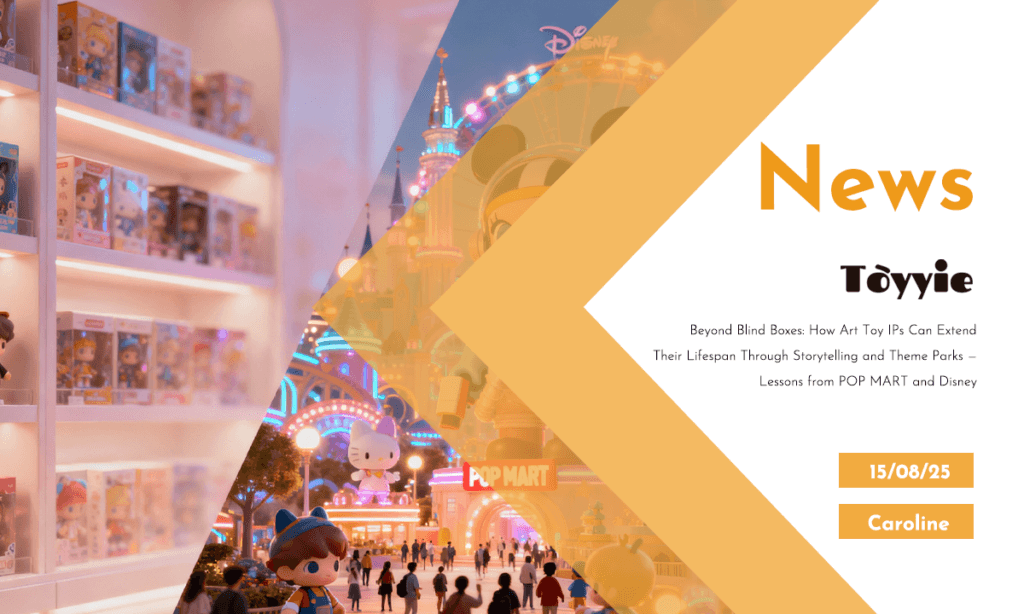
You may know them for the wildly successful MOLLY blind box series. But in recent years, they’ve expanded into physical theme parks and immersive experiences centered around their IPs.
They’re not just selling toys anymore—they’re creating entire worlds.
In their Shanghai flagship store, for example, visitors can take photos with giant versions of their characters. They’ve also launched mobile games and animated shorts to bring their figures to life.
What’s brilliant about this approach is that it turns a passive product (a blind box) into an active experience (a theme park visit, a game session, a cartoon episode).
I visited one of their pop-up events in Shenzhen last year, and honestly? I felt like I was stepping into the world of their IP.
Art toy buyers don’t just want cool stuff—they want to *feel* something.
And when you give them a chance to interact with your IP—through play, animation, or real-world experiences—you turn casual buyers into loyal fans.
What This Means for Indie Creators
Big companies like Disney and POP MART have big budgets—but you don’t need one to tell a good story.
Here’s how I applied these lessons on a small scale:
– **Started with character development**: Before sculpting, I wrote down who each character was—where they came from, what they liked, what scared them.
– **Built visual stories**: I created a 4-panel comic and posted it on Instagram. Fans loved seeing the characters come to life.
– **Engaged fans with content**: Short videos of my art toy interacting with other toys took only minutes to make—but got the most likes and comments.
– **Tried offline experiences**: At a local convention, I brought life-sized cutouts and set up a photo booth. Fans loved it—and several bought multiple figures just to support the idea.
You don’t need a theme park to build a meaningful connection. You just need to think bigger than the toy itself.
Final Thoughts: Your Art Toy Deserves a Life Beyond the Box
The global art toy market is growing fast—but competition is rising too.
If you want your art toy to stand out and last longer, go beyond blind boxes and think about:
– Character development
– Cross-media storytelling
– Creating experiences—not just products
Disney built a $200B empire on stories. POP MART is building theme parks around art toys.
You don’t need to go that far—but you *can* borrow from their playbook.
Start small. Tell a story. Make your art toy more than a toy. Make it someone’s friend.
Want to share your thoughts or experiences? Drop a comment below or send me a message. Let’s grow together in this exciting space.
📌 **#ArtToys #DesignerToys #CreativeEntrepreneur #BrandStrategy #Storytelling #POP MART #Disney #IPDevelopment #ToyDesign #ContentMarketing**