If you’ve ever held a high-end collectible toy from a European or US brand, you know the feeling.
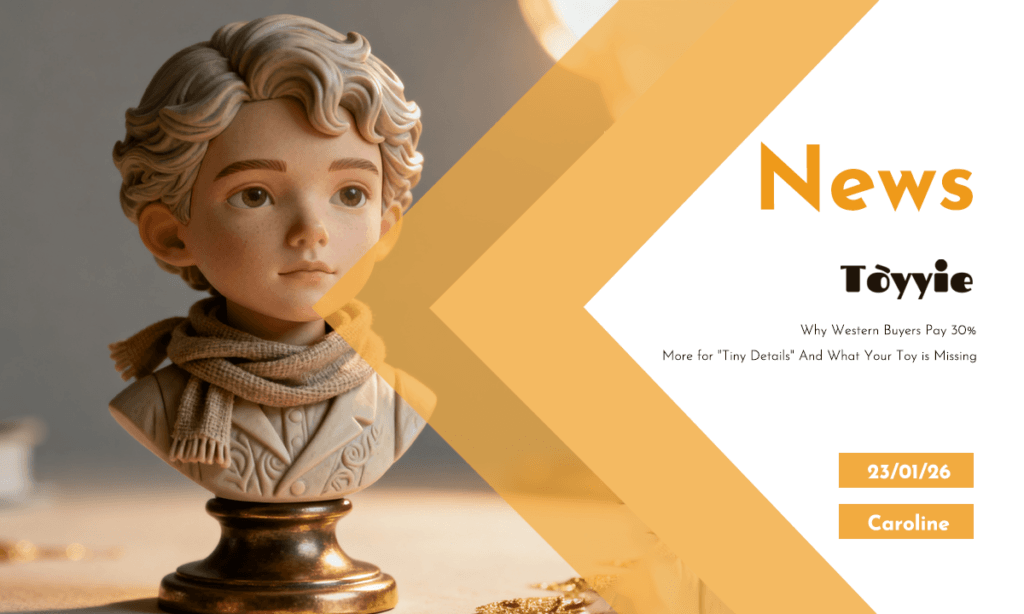
It’s not just the design. It’s the weight. The texture. The way light hits a matte coat, or how a tiny fabric scarf feels real.
Meanwhile, a similar-looking toy from another brand feels… hollow. Light. Like plastic.
The price difference? Often 25–30%. And yes — people pay it.
Why?
Because in Western markets, perceived quality isn’t about size or color. It’s about micro-details — the subtle choices that signal craftsmanship, care, and authenticity.
And if your toy is missing this, you’re not just losing premium pricing. You’re losing trust.
Here’s what really moves the needle.
🔹 It’s Not the Paint — It’s the Finish
Two toys. Same color. Same shape.
One uses standard glossy paint. The other uses a soft-touch matte coating with slight texture.
The matte one feels more expensive. Why? Because matte finishes are harder to apply evenly. They chip easier. They cost more.
But they also feel intentional — like someone cared about how it feels in your hand.
We once worked with a Berlin-based brand that insisted on a velvety matte finish for their forest spirit figure. It took 3 extra rounds of testing to get it right. But when it launched, customers said it “felt alive.”
That’s the power of finish.
Pro tip: Offer matte, satin, or soft-touch options — even if they cost more. Western buyers notice. And they pay for it.
🔹 Realism Lives in the Texture
Look at the character’s hair. Is it molded plastic with lines carved in? Or does it have layered resin strands, slightly uneven, like real hair?
One is fast to produce. The other takes hand-layering, careful demolding, and more breakage.
But the difference? Night and day.
We had a client from LA who wanted a witch figure with wild hair. The first sample looked like a toy. We suggested building the hair in thin resin layers, with slight randomness — like wind-blown strands.
It took 40% longer to make. But the final product looked like art. Not mass production.
Same goes for fabric, fur, or skin. Texture breaks the “plastic” illusion. It tells the brain: “This is special.”
Pro tip: Use real fabric for capes or scarves. Even a 1cm patch of textured material can shift the entire perception of quality.
🔹 Weight = Value (Even When It Shouldn’t)
Here’s a weird truth: heavier feels better.
A resin figure with a solid metal base doesn’t just stay upright — it feels premium. Even if the metal adds no real function.
We once made two versions of the same angel figure:
- One with a hollow resin base
- One with a small iron insert
Same design. Same finish.
But users said the heavier one “felt more valuable” “like a real collectible.”
So we now offer weight inserts as a standard upgrade. It’s a tiny cost. A huge psychological impact.
Pro tip: Don’t make everything heavier. But add weight where it makes sense — bases, feet, or core parts. It signals permanence.
🔹 The Devil Is in the Hidden Spots
High-end toys aren’t just detailed where you see them. They’re detailed where you don’t.
Check the bottom. Is it rough, with mold lines and no finish? That’s a budget toy.
Or is it smooth, painted, maybe even signed with a small logo? That’s a premium product.
We had a Scandinavian client who insisted every figure be fully painted — even the part under the base. “If someone picks it up, they should feel the care,” they said.
That small touch became a brand signature. Fans started posting “bottom shots” on Instagram.
Pro tip: Fully finish hidden areas. It costs little, but screams quality when discovered.
🔹 Why This Matters for Your Brand
In Europe and North America, collectors aren’t just buying a figure. They’re buying proof of care.
That matte coat? It says, “Someone tested this.”
The textured hair? “This wasn’t rushed.”
The weight? “This is meant to last.”
These micro-details don’t just justify a higher price. They build trust — that your brand respects the craft, the customer, and the art.
And once that trust is built? Customers don’t just buy one. They buy your next drop. And the one after.
💡 Final Thought:
Details Aren’t Add-Ons. They’re the Product.
You can have the best concept, the coolest story.
But if the finish is glossy and thin, the hair is flat, and the base feels light — your toy will be seen as mass-market.
The “secret” isn’t one big thing. It’s 20 small choices that add up to a feeling: This was made with intention.
So don’t ask: “Can we cut this cost?”
Ask: “What does this detail say about us?”
Because in the end, your toy isn’t just an object. It’s a handshake between creator and collector.
Make it worth shaking.
What detail made you fall in love with a collectible? I’d love to hear what moved you — from texture to packaging. Share in the comments.