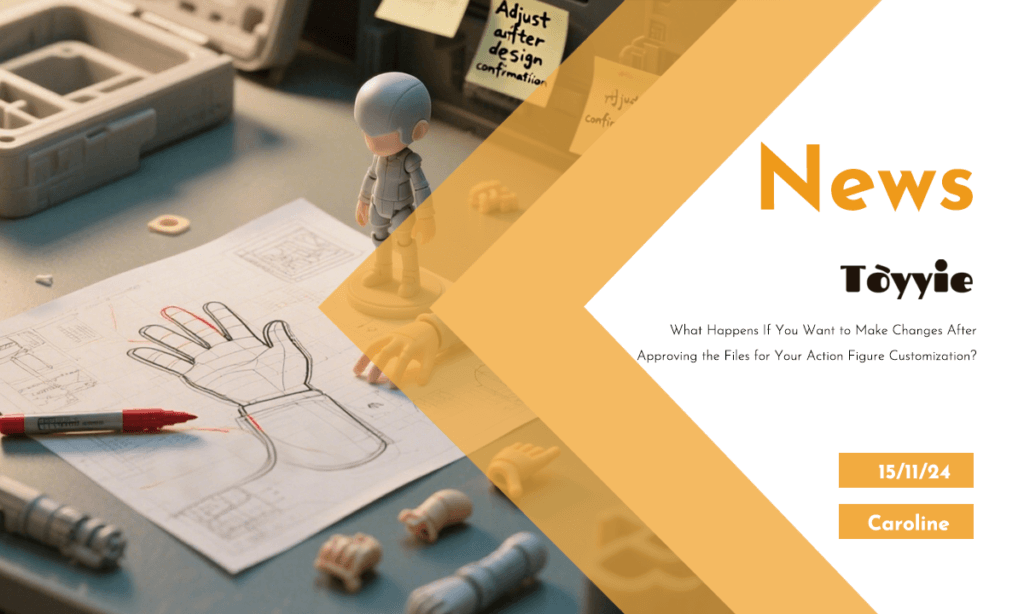
As someone deeply involved in the manufacturing of custom action figures, I’ve seen firsthand how a project can evolve unexpectedly, even after the design files have been finalized. It’s not uncommon for clients to realize they want tweaks or changes during production. However, making adjustments after file approval isn’t always straightforward—it comes with its own set of challenges, costs, and potential delays. Let me walk you through what happens in such scenarios, how to navigate them, and what you can do to avoid issues in the future.
Table of Contents
📄 What Happens If You Want to Make Changes After Approving the Files for Your Action Figure Customization? 🛠️
Technical Summary: Post-approval changes in custom action figure manufacturing impact CAD revision cycles (±0.1mm tolerance), tooling rework costs, material sourcing lead time, and production scheduling optimization.
Why Post-Approval Changes Happen 💡
First, let’s acknowledge that wanting to make changes post-approval is completely natural. Here’s why it often happens:
A New Creative Idea Emerges 🎨
After reviewing a prototype or visualizing the product further, you might think of a brilliant enhancement that would elevate the design.
Unforeseen Market Trends 📈
A sudden shift in market trends might push you to consider updates that make your action figure more competitive.
Detail Oversight 🔍
Despite thorough reviews, sometimes small design details or functionality requirements are missed during the initial approval process.
Budget Adjustments 💰
You might need to scale back or enhance certain features due to changes in your budget allocation.
While these reasons are valid, changes at this stage can have a ripple effect on manufacturing timelines and costs.
TOYYIE Engineering Insight: Post-approval changes often require reworking CAD files with ±0.1mm precision and can introduce shrinkage rate adjustments (typically 1.5%-2.5%) in injection molding. Our shared equity in 7 specialized factories ensures rapid feasibility feedback, maintaining compliance with ASTM F963 and EN71-3 safety standards.
The Manufacturing Implications of Changes 🛠️
When you request a change after file approval, several steps need to be revisited or redone, depending on the scope of the adjustment:
Re-Engineering the Design 🖥️
If the change involves altering physical dimensions, aesthetics, or functionalities, the 3D CAD files need to be revised. This can affect molds, tooling inserts, or rapid prototyping models. Precise draft angles (typically 1°-3°) must be reassessed to avoid molding defects.
Tooling and Molding Adjustments 🔧
Any modification impacting the structure of the action figure requires adjustments to molds, which can be costly and time-consuming. Mold modification cycles typically add 5-7 business days and may increase scrap rates by 2-3% during ramp-up.
Material Procurement 📦
If the change affects materials, new resources might need to be sourced, potentially delaying production. This includes verifying material certifications for compliance with REACH and RoHS directives, with typical lead times of 2-4 weeks for specialized polymers.
Production Schedule Impact ⏳
Your project timeline may need to be reworked, affecting not only your delivery date but possibly the manufacturer’s scheduling with other clients. Mold cycle times, typically 30-60 seconds per unit, and production batch sizes are recalculated accordingly.
TOYYIE Engineering Insight: Design changes post-approval often necessitate re-evaluation of draft angles to avoid undercuts that complicate demolding, with typical shrinkage rates between 1.8%-2.2% depending on resin selection. Our 7 factory partners maintain strict ISO 9001 protocols to ensure quality during such iterations.

Caroline
Hi, I'm the author of this post, and I have been in this field for more than 5 years. If you want to wholesale toy or toy product, feel free to ask me any questions.
Caroline
Hi, I'm the author of this post, and I have been in this field for more than 5 years. If you want to wholesale toy or toy product, feel free to ask me any questions.