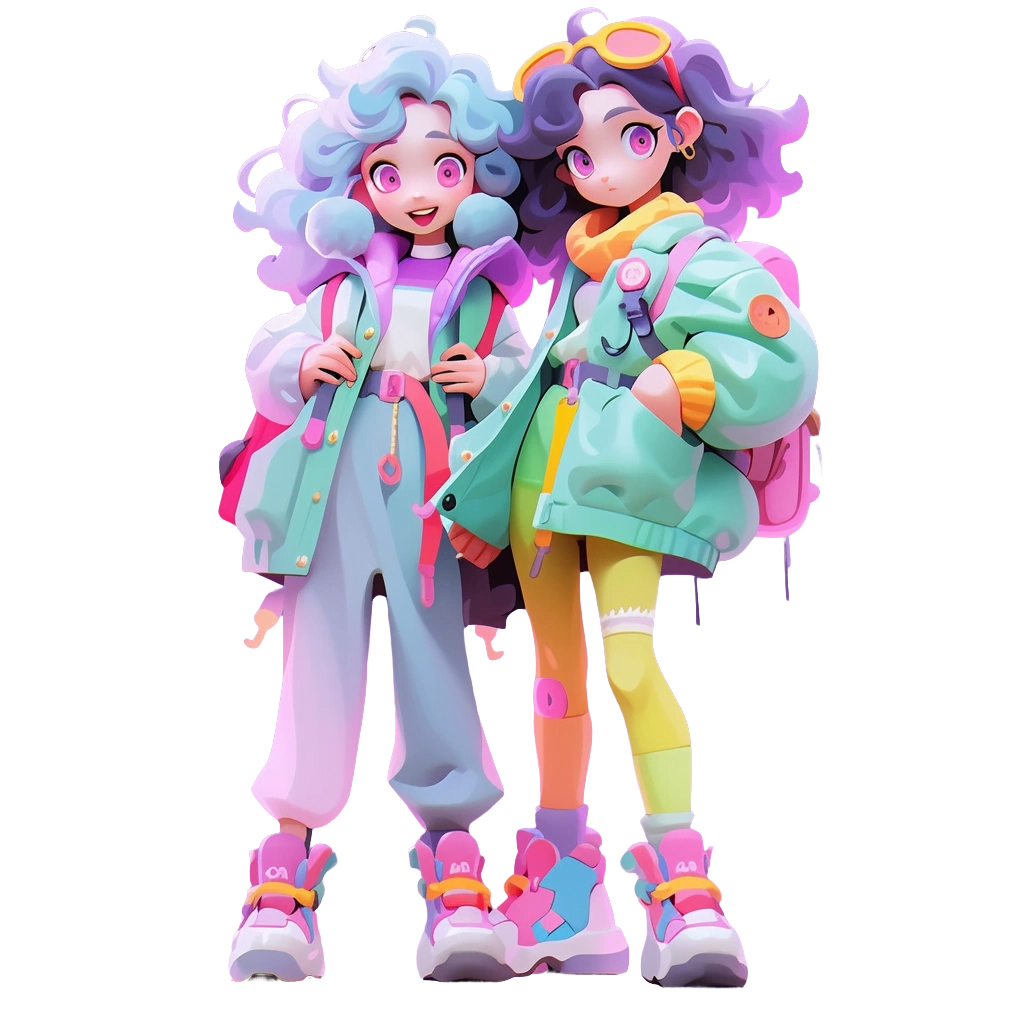
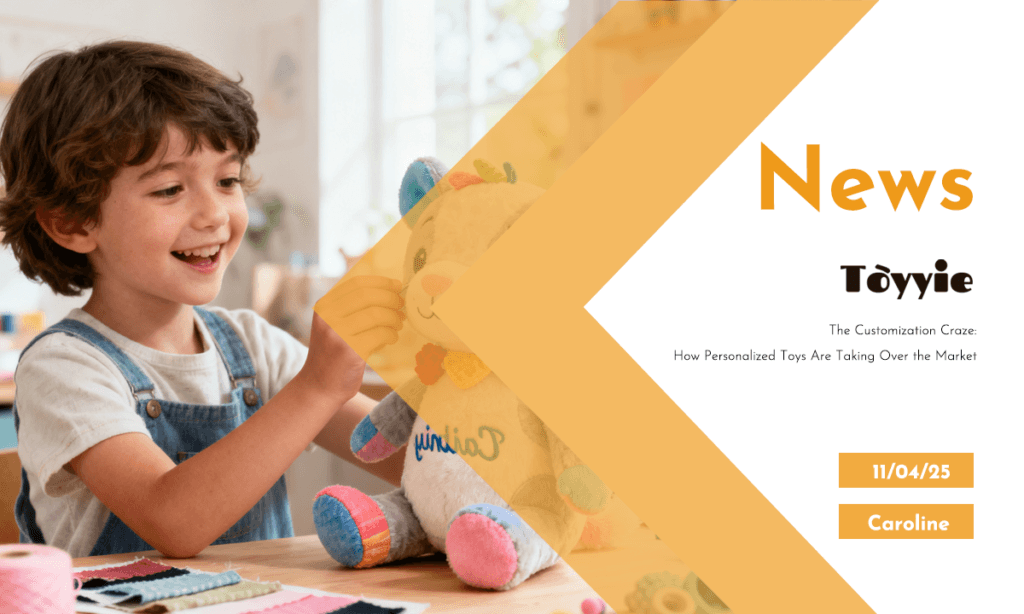
🧸 The Rise of Personalized Toys: The toy manufacturing industry is rapidly evolving with mass customization enabled by modular design, 3D printing, and AI-driven personalization, meeting modern consumer demand for unique, identity-reflective products.
In today’s competitive toy market, TOYYIE leverages advanced manufacturing technologies to deliver customized, high-quality toys that embody individuality and innovation. As personalization becomes a standard expectation, TOYYIE integrates modular design, data analytics, and compliance with global safety standards to transform play experiences.
Personalized Toys: Industrial Innovation and Market Dynamics 🧩
| Customization Method | Technology Used | Typical Lead Time | Compliance Standards |
|---|---|---|---|
| Embroidery & Textile Printing | Automated CNC embroidery machines | 7-10 days | ISO 8124, EN71 |
| 3D Printing | SLA/DLP and FDM printers for prototypes and small batches | 3-5 days | ASTM F963 |
| Modular Assembly Kits | Injection molding with interchangeable components | 14-21 days | EN71, CPSIA |
| Digital App Integration | AR/VR platforms with physical toys | Instant updates | FCC, CE |
| AI Personalization | Machine learning algorithms for design prediction | Varies | Data privacy compliance (GDPR) |
| Custom Paint & Finishing | Automated spray booths and hand detailing | 10-15 days | ISO 8124-3 |
| Packaging Customization | Digital print on demand | 5-7 days | FSC-certified materials |
Mass Customization through Modular Design
Utilizing modular design principles, TOYYIE enables scalable production of personalized toys by combining standardized components with interchangeable features. This approach reduces tooling costs and shortens production cycles while maintaining product uniqueness.
TOYYIE Insight: TOYYIE achieves a customization lead time reduction of up to 30% by implementing modular tooling and in-house 3D printing, maintaining compliance with ISO 8124-1 and EN71-1 safety standards.
Advanced Manufacturing Technologies
Integration of 3D printing and AI-driven design tools allows rapid prototyping and precise customization. Technologies such as SLA and FDM printing facilitate detailed figurines and action figures, while AI analyzes customer preferences to optimize design variants.
Data-Driven Consumer Insights
Leveraging big data and social media analytics, TOYYIE identifies emerging customization trends and consumer demands. This data informs design decisions, ensuring toys reflect diverse cultural backgrounds, abilities, and personal interests.
Compliance and Safety Standards
All customized products adhere strictly to international safety regulations including EN71, ASTM F963, and CPSIA. TOYYIE implements rigorous quality control processes to ensure materials and manufacturing methods meet or exceed standards.
Enhanced User Engagement via AR and AI
The fusion of physical toys with augmented reality (AR) and artificial intelligence (AI) creates immersive play experiences. TOYYIE develops companion apps that enable children to interact with their personalized toys digitally, fostering deeper emotional connections.
TOYYIE Customization Capabilities and Technologies
- Modular Assembly: Enables interchangeable toy components for diverse configurations.
- 3D Printing: Produces detailed prototypes and limited-edition collectibles with rapid turnaround.
- AI-Powered Design: Utilizes predictive analytics for personalized product features.
- AR Integration: Enhances user interaction through companion mobile applications.
- Compliance Assurance: Ensures all customized toys meet EN71, ASTM, and CPSIA regulations.
TOYYIE — Your Partner in Advanced Toy Customization
Leverage TOYYIE’s expertise in modular design, AI-driven personalization, and compliance to bring your unique toy concepts to market efficiently.
Contact TOYYIE for a custom quote →