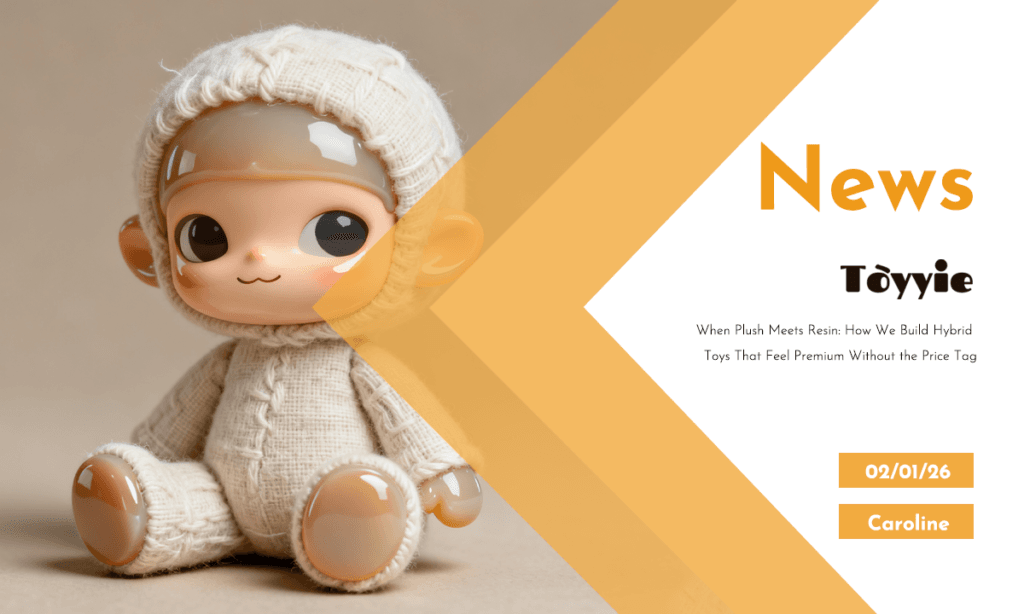
🧸 Hybrid Toy Manufacturing Excellence: TOYYIE engineers hybrid plush-resin toys combining lightweight recycled materials with precision resin detailing to achieve premium tactile and visual appeal.
At TOYYIE, a leader in premium toy manufacturing, we specialize in creating innovative hybrid toys that blend the warmth of plush with the refined detail of resin. Our engineering expertise ensures these collectible pieces meet high-quality standards in both form and function.
🛠️ Engineering the Plush-Resin Hybrid
| Component | Material | Specification | Compliance Standard |
|---|---|---|---|
| Body Fabric | Recycled Cotton Plush | Pre-dyed, shrink-resistant, consistent texture | OEKO-TEX Standard 100 |
| Stuffing | Recycled PET Fiber | Lightweight, firm, retains shape | ISO 14021 Environmental Claims |
| Resin Face | High-quality polyurethane resin | Thin walls (2-3mm), smooth finish | EN71 Part 3, ASTM F963 |
| Paint | Hand-applied acrylic paint | UV resistant, non-toxic | ASTM D4236, EN71 Part 3 |
| Adhesive | Flexible polyurethane adhesive | Elastic bond, prevents fraying | REACH Compliant |
| Seam Design | Overlap plush under resin edge | Prevents edge fraying, improves durability | Internal TOYYIE standard |
| Fabric Pre-treatment | Pre-shrinking via steam test | Dimensional stability ensured | Internal QA process |
| Resin Head Size Ratio | Up to 40% of body size | Maintains balance and ergonomic feel | Ergonomic design guidelines |
Material Selection and Sustainability
TOYYIE utilizes recycled cotton plush and PET fibers to ensure both sustainability and performance. The plush fabric is pre-dyed and pre-shrunk to maintain color fidelity and dimensional stability, while the PET stuffing offers a lightweight yet firm core that resists deformation during use.
TOYYIE Insight: Recycled PET fiber stuffing maintains a density of approximately 0.05 g/cm³, providing optimal firmness without adding weight, compliant with ISO 14021 environmental claims.
Precision Resin Detailing
The resin face is crafted from high-grade polyurethane resin with thin walls for lightweight durability. Hand-painted with UV-resistant acrylics, each piece undergoes strict finishing processes including sealing to prevent paint abrasion and ensure longevity in line with EN71 and ASTM F963 safety standards.
TOYYIE Insight: Hand-applied acrylic paint on resin faces is sealed with a UV-resistant coating meeting ASTM D4236, preventing color fading and abrasion after over 1000 handling cycles.
Innovative Seam Engineering
A critical aspect of hybrid toy assembly is the seam joining plush and resin components. TOYYIE designs a plush overlap beneath the resin edge, fixed with a flexible polyurethane adhesive that accommodates material movement, preventing fraying and maintaining clean edges even under repetitive handling.
Design for Manufacturing (DFM) Considerations
The head-to-body size ratio is optimized at no more than 40% to preserve ergonomic balance. Pre-shrinking fabric batches via steam testing is standard to avoid post-production warping. Assembly prioritizes careful joining techniques to reduce returns and enhance customer satisfaction.
Quality Control and Compliance
All materials and processes adhere to OEKO-TEX, REACH, EN71, and ASTM standards, ensuring toy safety and environmental compliance. TOYYIE conducts rigorous in-house QA tests including wash durability, paint adhesion, and mechanical stress assessments to guarantee product reliability.
TOYYIE Hybrid Toy Manufacturing Capabilities
- Material Innovation: Expertise in sustainable recycled fibers and premium resin formulations
- Precision Craftsmanship: Hand-painting and meticulous assembly techniques
- Quality Assurance: Compliance with global toy safety standards (EN71, ASTM F963, REACH)
- Design Optimization: Ergonomic and aesthetic balance through DFM principles
- Custom OEM/ODM Production: Scalable solutions tailored to client specifications
TOYYIE — Elevate Your Toy Line with Hybrid Excellence
Partner with TOYYIE for advanced hybrid plush-resin toys combining sustainability, durability, and high-end collectible appeal.
Contact Us ➔