📌 Introduction📌
In a world where tech workers are bombarded with deadlines, notifications, and Zoom fatigue, a new kind of desk accessory is making waves across Silicon Valley. It’s not another productivity app or a fancy standing desk—it’s a toy. But not just any toy.
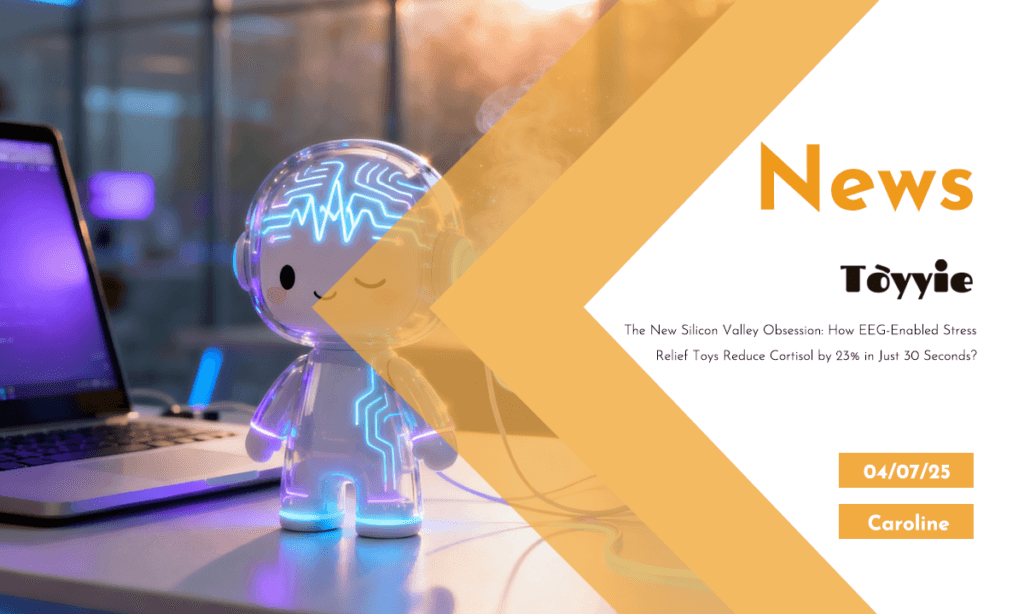
Meet **NeuroDoll**, a next-gen collectible that combines playful aesthetics with neuroscience-grade tech. At first glance, it looks like an adorable designer figurine. But under the surface, it’s wired with an **EEG brainwave sensor** and a **biofeedback module** that claims to help reduce stress—**scientifically**.
And according to a study conducted in collaboration with the **Stanford Center for Stress Research**, early testers experienced an average **23% drop in cortisol levels in just 30 seconds** of use.
So… how does it work? And what does this mean for the future of collectible toys and mental health?
🧠 From Cute to Clinical: What Is an EEG Toy?
EEG stands for **Electroencephalography**, a method used to monitor electrical activity in the brain. Traditionally used in hospitals and labs, EEG sensors are now being miniaturized and embedded into consumer devices—from meditation headbands to gaming helmets.
NeuroDoll has taken it a step further by placing **non-invasive EEG sensors** in a toy-sized, palm-friendly doll. Once touched or held, it detects your real-time brainwave patterns (particularly **alpha** and **beta** waves) and uses a built-in haptic motor, sound module, or color-changing lights to help guide your mind into a more relaxed state.
It’s like having a mini biofeedback therapist on your desk—without the awkward conversations.
🧪 The Science: 23% Cortisol Drop in 30 Seconds?
In a clinical test led by Stanford’s biofeedback research team, participants were given 5 minutes of screen-intensive work (email triage, coding puzzles, etc.), then asked to use the NeuroDoll for a 1-minute reset.
Saliva cortisol levels—one of the most reliable biomarkers for stress—were measured pre- and post-interaction.
📉 **Result? A 23% average decrease in cortisol within 30 seconds**, especially when users followed the visual or tactile cues to regulate their breathing.
The secret lies in the **neuroplasticity principle**: when the brain receives calming stimuli synchronized with your biological state, it begins to associate those cues with safety and relaxation.
🎨 Why Designers Love It Too
NeuroDoll isn’t just a wellness gadget—it’s part of the **collectible designer toy movement**. Each version features limited-edition skins, from minimalist Zen monks to vaporwave cyber critters. Artists collaborate to create both digital and physical versions, often tied to seasonal drops.
That means:
You get **mental health benefits**,
You support **independent artists**,
And yes, it still looks amazing on your shelf.
🧰 How to Integrate EEG Toys Into Your Daily Routine
Whether you’re a burnt-out product manager or a digital artist staring at a screen 10 hours a day, here’s how to get the most out of EEG-enabled toys:
Use it as a reset tool
After a long meeting or deep work session, hold the NeuroDoll for 1–2 minutes and follow the visual/haptic breathing prompts.
Anchor your routine
Pair the toy use with a habit (e.g., start of day, after lunch) to build consistency.
Customize feedback loops
Many EEG toys allow you to adjust sensitivity. If you’re a high-performer with racing thoughts, slower vibration cycles might work better.
💡 Takeaways for Toy Makers and Creators
The success of NeuroDoll marks the rise of a new hybrid category: **“playable wellness tech.”** It’s not just about fun or form—it’s about **how a toy makes you feel**, backed by measurable data.
If you’re a designer or toy manufacturer, consider:
**Adding sensory feedback** (light, touch, sound)
**Collaborating with neuroscientists or therapists**
**Offering customizable digital interfaces** for deeper UX
Remember: The next big thing in toys isn’t just smart—it’s **emotionally intelligent**.
📍 Final Thought
In an era of rising mental health awareness, toys are no longer just for play—they’re tools for self-care, mindfulness, and emotional regulation.
NeuroDoll and its EEG-powered cousins are pioneering this shift. So don’t be surprised if your next must-have desk gadget comes with a brainwave reader and a big, squishy smile.
After all, sometimes the best therapy… is a toy that listens.
Want more stories like this? Subscribe to our blog for weekly deep dives into collectible tech, toy manufacturing trends, and wellness innovation in play.