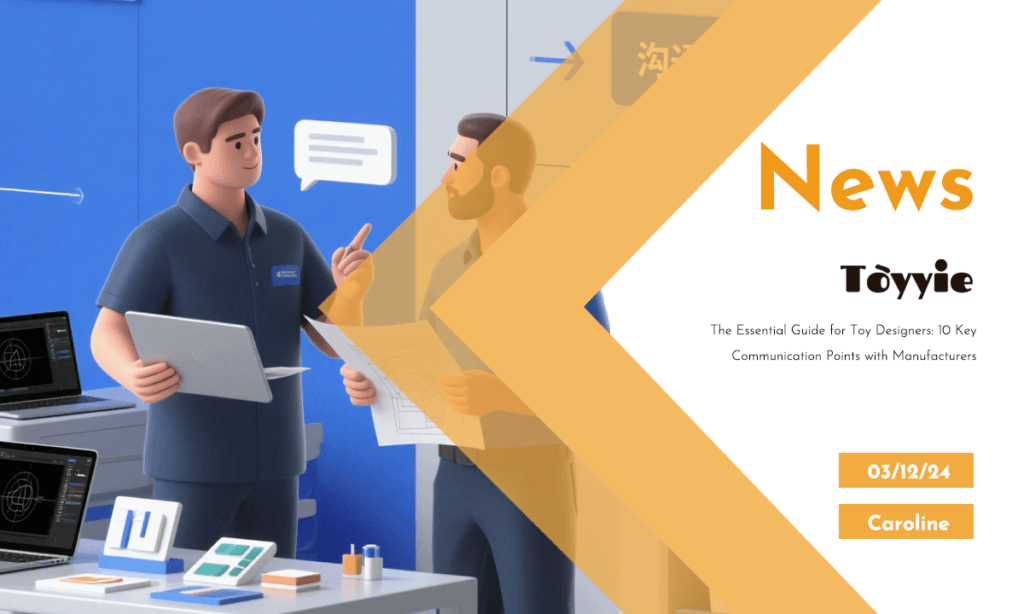
🎨 The Essential Guide for Toy Designers: 10 Key Communication Points with Manufacturers 🧸
Technical Summary: Comprehensive OEM/ODM communication workflows integrating ±0.1mm tolerance design specifications, material selection based on ASTM F963 and EN71-3 compliance, optimized mold tooling costs, and production scheduling with molding cycle times tailored for toy manufacturing.
📌 Introduction📌
As a toy designer, you know that the journey from concept to production is a long and often challenging road. One of the most important aspects of ensuring a successful outcome is clear and effective communication with the factory. But how do you make sure that you’re not just exchanging emails or messages? How can you ensure that your ideas, concerns, and expectations are understood by the manufacturers in the way that you intend? That’s what I want to share with you in this article. I’ll walk you through the 10 essential communication points that every toy designer should keep in mind when working with manufacturers.
Through my years of experience working in the toy manufacturing industry, I’ve learned that the more you invest in clear communication upfront, the smoother the entire process will be. It’s not just about sharing designs – it’s about setting expectations, solving potential issues before they arise, and ensuring the final product lives up to the vision you’ve worked so hard to create.
So, if you’re ready to level up your communication and streamline your process, keep reading. I’ve gathered 10 crucial communication points that will help you avoid misunderstandings and keep your project on track.
Clear Design Specifications: The Foundation of Communication
The first and most important thing you need to do is provide clear, detailed design specifications. Think of your design as a blueprint for the product, and the clearer and more precise it is, the less chance there is for errors. When I started working with manufacturers years ago, I learned that a vague description or unclear measurements could result in unexpected issues.
For example, if you’re designing a custom action figure, the size, joint points, and materials must be laid out in great detail. I’ve made the mistake of assuming that the factory would understand my vision without enough clarification, and it always ended up costing time and money to fix those miscommunications.
🔑 Tip: Always include CAD drawings, technical drawings, and 3D models. The more visual aids you can provide, the better. Don’t rely solely on words – let the design speak for itself.
TOYYIE Engineering Insight: Maintaining strict ±0.1mm tolerances in design specifications is vital to minimize molding shrinkage rates, which typically average between 1.5%–2.5% for ABS plastic in toy parts. TOYYIE leverages draft angles of 1.5°–3° and undercut avoidance strategies across 7 specialized factories, ensuring optimized tool life and reduced scrap rates below 2% in compliance with ASTM F963 and EN71-3 safety standards.
Set Realistic Expectations for Timeframes
It’s easy to get caught up in the excitement of your design, but setting realistic expectations for timelines is crucial. One of the key things I’ve learned is that while you may want your prototype yesterday, factories have their own timelines that are impacted by factors like workload, material availability, and production schedules.
When you’re negotiating with a manufacturer, be upfront about your deadlines. But also, be prepared for them to provide you with a timeline based on their current capacity. In my experience, most factories are willing to expedite a project, but you’ll need to pay extra for rush orders – and sometimes that extra cost isn’t worth it.
🔑 Tip: Ask for a clear production schedule from your factory. Factor in buffer time for unexpected delays, and try to avoid last-minute changes that could delay production.
TOYYIE Engineering Insight: Factory production scheduling typically accounts for a molding cycle time averaging 30–90 seconds depending on complexity and material, with prototype turnaround times ranging from 2 to 4 weeks. TOYYIE’s integrated supply chain across 7 factories enables agile capacity planning, reducing typical production lead times by 15% through real-time OEM/ODM workflow synchronization.
Understand the Costs Involved
When it comes to custom toys, the cost can vary dramatically depending on the complexity of the design, the materials used, and the production process. I’ve found that one of the best ways to avoid surprises is to break down the cost structure with your manufacturer from the start. Discuss mold costs, material costs, labor, and packaging fees – these all add up quickly.
Often, manufacturers will quote a price based on a low MOQ (Minimum Order Quantity), but as you increase the order size, the unit cost often drops. It’s important to discuss the cost breakdown early on and understand where you can adjust your design or production to meet your budget.
🔑 Tip: Request a full quote that includes all costs – mold costs, materials, labor, and packaging. Don’t just focus on the unit cost – consider the overall project budget.
TOYYIE Engineering Insight: Mold tooling costs can represent up to 40% of initial project expenses, influenced by the number of cavities, steel grade, and complexity of undercuts. TOYYIE’s shared equity in 7 specialized factories enables cost amortization across multiple projects, reducing average mold costs by up to 25%, while maintaining strict quality compliance with ISO 9001 standards.
Choosing Materials Wisely
When working with a toy manufacturer, the choice of materials plays a huge role in both the cost and the quality of the final product. The type of plastic or fabric, the finish, and any additional features (like glitter, special paint, or textures) will all influence the price and manufacturing process.
I always recommend discussing the material options in detail with your manufacturer. Some materials may be more cost-effective but might not deliver the look or feel you want for your product. Others might be too expensive, pushing the cost of the project out of your budget. Be transparent with your manufacturer about your material preferences, and ask for their expert opinion on alternatives that might work better for both design and cost efficiency.
🔑 Tip: Consider both the aesthetic and functional qualities of the materials you choose. Ask the factory to provide samples or suggestions for material alternatives.

Search Toyyie BLOG
Categories
Join our NEWSLETTER
Stay in the know and receive DIY guides from our PROS: new product updates + exclusive promotions!
Trending Topics