The shipping costs are rising, contact us for a real-time quote.

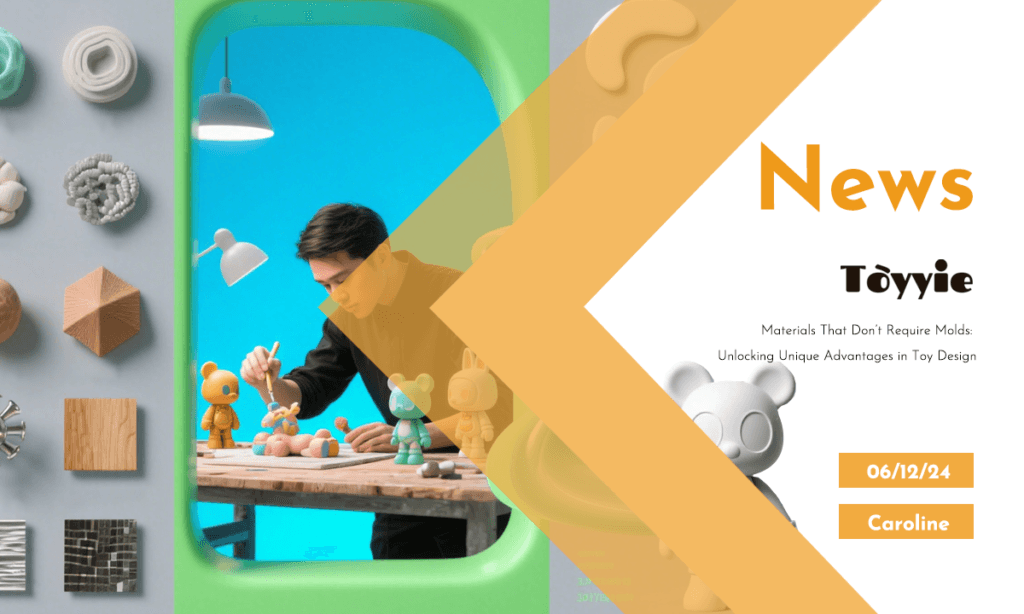
🧩 Materials That Don’t Require Molds: Unlocking Unique Advantages in Toy DesignĀ šŸŽØ

In toy design, every choice matters, from the concept to the material used. One question I often hear is: *ā€œCan we create this without a mold?ā€* This seemingly simple inquiry opens up a world of possibilities, especially for designers who want to innovate without the constraints of traditional molding. Today, let’s dive into the unique advantages of using materials that don’t require molds and explore how they can redefine your toy design journey.

Table of Contents

🧩 Materials That Don’t Require Molds: Unlocking Unique Advantages in Toy Design šŸŽØ

Technical Summary: Leveraging advanced non-molded materials like UV-curable resins with Shore A hardness up to 85, additive manufacturing filaments with dimensional tolerance ±0.1mm, and vacuum-formed thermoplastics optimized for volumetric weight reduction enhances prototyping speed, cost-efficiency, and design versatility in toy manufacturing.

šŸ¤” Why Consider Non-Molded Materials?

Using materials that don’t require molds isn’t just about cutting costs. It’s about embracing flexibility, creativity, and efficiency. Let’s look at the main reasons why these materials are gaining traction:

1ļøāƒ£ Faster Prototyping and Production

When you eliminate the need for molds, production timelines shrink dramatically. Prototyping with materials like UV-curable resin (Shore A hardness range of 70-85), thermoplastics, or even 3D printing filaments that maintain dimensional tolerances within ±0.1mm means you can create detailed designs without waiting for costly mold fabrication.

TOYYIE Engineering Insight: TOYYIE’s proprietary process control supports molding cycle times as low as 8 minutes for resin casting without traditional molds. Our 7 specialized factories apply optimized draft angles (1.5° minimum) and undercut management to ensure precise finish and minimal scrap rates (<3%). Compliance with ASTM F963 and EN71-3 ensures safety standards for children’s toys.

2ļøāƒ£ Cost-Effective Solutions for Small Batches

For smaller production runs, investing in molds can eat into your budget. Non-molded materials are a practical choice, enabling lower Minimum Order Quantities (MOQ) of as few as 50 units while maintaining high-quality results due to lower tooling amortization costs.

TOYYIE Engineering Insight: TOYYIE’s shared equity model in 7 factories allows cost pooling and risk mitigation, reducing per-unit scrap rate to less than 5% for low-volume runs. Precision in wall thickness control (minimum 1.5mm) ensures material efficiency without compromising structural integrity.

3ļøāƒ£ Greater Design Flexibility

Non-molded materials offer freedom. Intricate shapes, textures, and customizations that might be impossible or overly complex with molds are much easier to achieve, especially when leveraging multi-axis 3D printing or manual resin casting with tolerances of ±0.1mm.

TOYYIE Engineering Insight: Managing shrinkage rates (typically 0.5%-1% for thermoplastics) during post-processing and applying appropriate draft angles (1°-2°) in design enable minimal rework. TOYYIE ensures compliance with ASTM F963 and EN71-3 for toy safety while maximizing aesthetic fidelity.

4ļøāƒ£ Sustainability and Eco-Friendly Options

With growing emphasis on sustainability, many non-molded materials are recyclable or biodegradable, aligning with modern consumer values and regulatory requirements such as REACH.

TOYYIE Engineering Insight: TOYYIE’s eco-conscious supply chain integrates materials compliant with BSCI and ICTI standards, employing volumetric weight optimization across packaging and logistics to reduce carbon footprint.

šŸ” Materials That Don’t Require Molds: Pros and Applications

1. Resin

šŸ’” Why It’s Unique: Resin is versatile and perfect for detailed, handcrafted pieces. UV-curable resins provide Shore A hardness up to 85, excellent tensile strength (up to 40 MPa), and low shrinkage rates (<1%), making it ideal for prototypes, limited editions, or collectibles.

🧸 Applications: Resin is widely used in art toys, miniatures, and display pieces where precision (±0.1mm) and aesthetics are crucial.

āœ… Advantages:

  • Exceptional detail reproduction with minimum feature size down to 0.3mm.
  • Customizable with pigments, finishes, and textures to meet OEM/ODM specifications.

TOYYIE Engineering Insight: TOYYIE’s resin casting workflow maintains cycle times under 10 minutes per unit for small batches, with wall thickness controlled between 1.5-3mm to balance strength and weight, achieving a scrap rate below 4% across 7 partner factories.
Picture of Caroline
Caroline
Hi, I'm the author of this post, and I have been in this field for more than 5 years. If you want to wholesale toy or toy product, feel free to ask me any questions.

Picture of Caroline
Caroline
Hi, I'm the author of this post, and I have been in this field for more than 5 years. If you want to wholesale toy or toy product, feel free to ask me any questions.

Get A Free
Quote
And Estimate

Toyyie home Banner 2
NOW

Subscribe

SIGN UP FOR OUR WEEKLYNEWSLETTER

Be the first to hear about our new arrivals, upcoming deals,and exclusive promotions.

Keep me up to date on news and offers

For more information on how we process your data for marketingcommunication. Check our Privacy policy.