What Is a Toy Library, Reimagined?
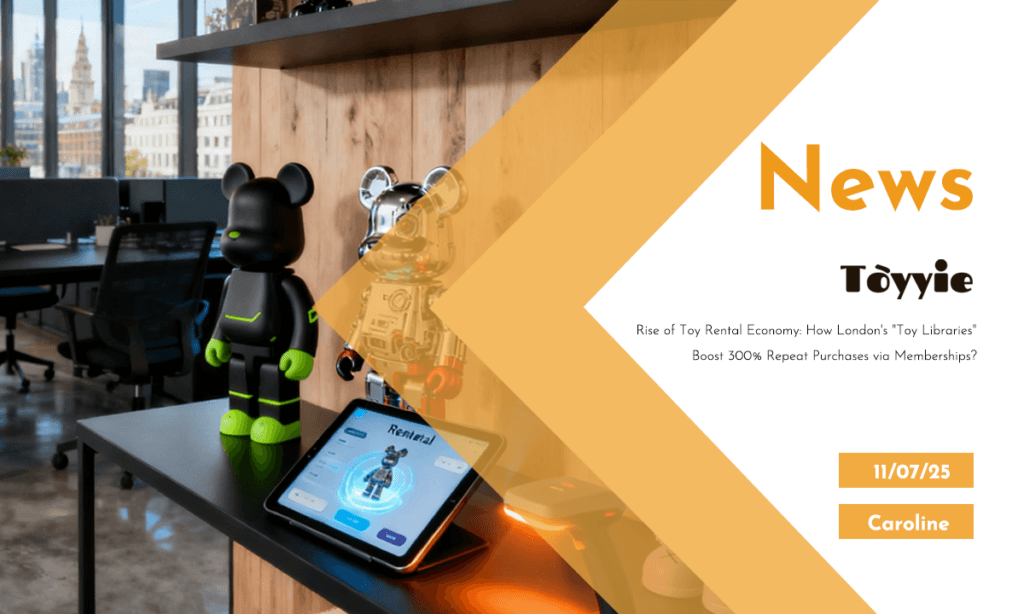
Forget plastic bins in public libraries. The modern toy library is a **curated collection of designer figures, art collectibles, and limited-edition toys** that users can access through a **monthly membership**. Subscribers can “check out” toys, display them at home or in their workspace, and return or exchange them at will.
The result? A circular economy that:
Reduces waste
Increases brand exposure
Promotes user experimentation
Encourages a deeper emotional connection with the product ecosystem
One standout case is London’s “Loop & Play,” a toy-sharing startup launched in 2023. Within just 12 months, their **repurchase rate increased by 300%**, not because they sold more, but because they rented smarter.
The Subscription + Secondhand Loop Model Explained
At its core, Loop & Play uses a closed-loop system:
New toys enter the system from artists and brands.
Members subscribe monthly, gaining access to limited drops and rare toys.
Returned toys are repackaged, restored, and circulated.
Popular or high-demand items are eventually offered for purchase at a discount.
Members can sell their own used toys back into the system for credits.
This creates a sustainable ecosystem where the same designer toy can **generate value across multiple owners**, without compromising its desirability or quality.
💡 Pro tip for creators and brands: Partnering with rental platforms not only extends the life cycle of your products but also acts as live-market research—you get real-time data on what designs people actually engage with.
Why It Works: Emotional Access vs. Permanent Ownership
What makes this model successful—especially among younger consumers—is the shift in mindset:
Millennials and Gen Z are more experience-driven.
Many live in urban apartments with limited space.
Collecting no longer means hoarding—it means *rotating and sharing*.
Designer toys are deeply emotional objects, but that emotion doesn’t always require permanent ownership. Sometimes, the ability to **interact with and enjoy** a toy for a month is enough to form a memory—and encourage a future purchase.
Case Study: The “Time-Limited Bond”
Loop & Play found that members who interacted with a rented toy for more than 14 days were **4x more likely to buy it** if offered. In psychology, this reflects the **“endowment effect”**—people begin to value something more simply because they’ve used it.
RFID Chips: Tracking Assets with Precision
Managing hundreds of circulating art toys sounds like a logistical nightmare—until you add **RFID technology** into the mix.
Each toy in Loop & Play’s collection is embedded with a **discreet RFID chip**, enabling:
Real-time tracking of who has what
Automated return and check-out processes
Inventory forecasting (which designs are overbooked, which sit unused)
Protection against loss or fraud
This transforms each designer toy into a **smart object**, part of a connected network with measurable usage data.
🧠 For manufacturers: Embedding RFID chips during production is relatively low-cost and adds immense operational value for platforms that run subscription or sharing models.
Opportunities for Toy Designers and Studios
The rental economy may sound counterintuitive to a business built on selling collectibles, but it offers fresh possibilities:
- Exposure to new audiences who wouldn’t risk a $200 upfront purchase
- Long-tail sales, as toys become coveted after multiple rentals
- More data-driven iterations, since feedback comes in live and direct
- Environmental responsibility, reducing excess production and unsold stock
Brands like Medicom, Superplastic, and even small indie toy makers are beginning to explore limited-run, rental-first drops, building buzz through scarcity and rotation before opening up full retail sales.
Tips for Getting Started in the Designer Toy Rental Economy
If you’re a toy maker, designer, or studio, here are a few starting points:
- Test the waters: Offer a small portion of your inventory to a local sharing platform or community group.
- Design for durability: Toys meant for shared use must be able to withstand gentle handling and repeated packing.
- Consider modular packaging: Make your packaging reusable, beautiful, and easy to re-seal.
- Build narrative value: Include a QR code or tag that shares the toy’s story, journey, and prior owners—like a passport.
- Stay close to the data: Use insights from rentals to improve future designs or select which pieces deserve a retail push.
Conclusion: Access Is the New Ownership
The toy rental model is not about replacing ownership—it’s about enhancing how we connect with objects, especially ones as emotionally rich as designer toys.
As platforms like Loop & Play show, the key to deeper customer loyalty may not be in how many toys people own, but how many they’ve loved—even temporarily.
In a world shifting toward sustainability and experience-first living, the rise of the rental economy could be one of the most exciting frontiers for the designer toy industry.