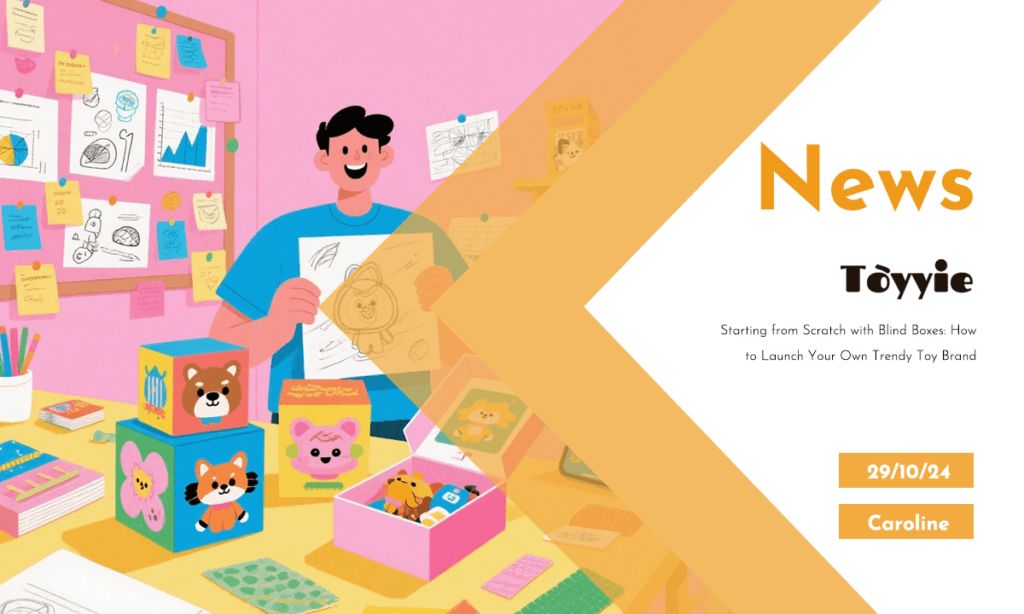
🎁 Starting from Scratch with Blind Boxes: How to Launch Your Own Trendy Toy Brand 🧸
Technical Summary: Leveraging material selection with precise Shore A hardness control, optimized tooling cost efficiency, and production cycle time management to develop blind box collectible toys adhering to ASTM F963 and EN71-3 safety standards.
The Spark: Finding Your Passion 💡
It all starts with a spark of passion. For me, it was the joy of collecting and the thrill of the unknown that blind boxes offered. I was fascinated by the idea of combining creativity, suspense, and joy into a single product. If you’re considering this path, think about what excites you. What kind of toys would you love to create? What themes or characters inspire you? Your passion is the fuel that will drive your brand forward.
When I began, I spent countless hours brainstorming and sketching ideas. I asked myself questions like, “What would make someone smile?” and “What stories do I want to tell through my toys?” Finding your passion will give you the motivation to overcome the inevitable challenges you’ll face.
TOYYIE Engineering Insight: Early-stage product ideation should consider material Shore A hardness between 20-40 for collectible blind box figures to balance durability and tactile appeal. TOYYIE’s network of 7 specialized factories ensures rapid prototyping with tooling cost optimization, maintaining strict tolerance adherence of ±0.1mm to preserve design integrity.
Research and Planning: The Foundation of Success 📊
Once you’ve identified your passion, it’s time to do some serious research. Understanding the market is crucial. Who are your potential customers? What are the current trends in the toy industry? Who are your competitors, and what are they doing right (or wrong)?
I remember spending late nights poring over market reports, analyzing popular toy lines, and even visiting toy stores to observe customer behavior. This research helped me identify gaps in the market and opportunities for innovation. For instance, I noticed a growing demand for eco-friendly toys, which led me to explore sustainable materials for my blind boxes.
TOYYIE Engineering Insight: Market research aligns with material compliance including ASTM F963 and EN71-3 standards, crucial for toy safety certification. TOYYIE factories maintain a shrinkage rate control within 1.5%-2.0% during injection molding, ensuring dimensional accuracy and reducing scrap rates to below 3% for sustainable production efficiency.
Creating Your Unique Brand Identity 🎨
Your brand identity is what sets you apart from the competition. It’s more than just a logo or a catchy name—it’s the story you tell, the values you uphold, and the experience you offer. Think about what makes your brand unique. Is it the design style, the storytelling, or perhaps a commitment to sustainability?
In my case, I wanted my brand to evoke a sense of wonder and adventure. I chose a whimsical art style and crafted stories around each character. This not only made my toys more appealing but also created a deeper connection with my customers. People weren’t just buying toys; they were buying into a world of imagination.
TOYYIE Engineering Insight: Brand design influences draft angles in mold tooling, typically recommended at 1.5° to 2° to facilitate smooth ejection and reduce tooling wear. TOYYIE’s collaborative ODM workflow integrates brand storytelling with manufacturing constraints for efficient cycle times averaging 30-45 seconds per shot in injection molding.
Prototyping and Design: Bringing Your Ideas to Life ✨
With your brand identity in place, it’s time to bring your ideas to life. This is where the magic happens—taking your concepts from sketches to tangible products. You’ll need to work with designers, sculptors, and manufacturers to create prototypes.
When I first started, I had little experience with manufacturing. I reached out to various designers and manufacturers, learning about different materials and production processes. Don’t be afraid to ask questions and seek advice. Building a strong network of professionals will be invaluable as you navigate this phase.
I vividly remember holding my first prototype. It was a mix of excitement and nerves—seeing my vision come to life was incredible, but I also knew there was still a long way to go. Prototyping is an iterative process, so be prepared for multiple rounds of feedback and revisions.
TOYYIE Engineering Insight: Prototype materials frequently include polyvinyl chloride (PVC) with tensile strength around 40-50 MPa and Shore A hardness of 30-35 for durability. Wall thicknesses optimized between 2-4mm prevent deformation during molding. TOYYIE supports rapid tooling with a molding cycle time reduction focus, enabling faster time-to-market within ±0.05mm dimensional accuracy.
Production: From Prototype to Product 🏭
Once you’re satisfied with your prototypes, it’s time to move into production. This phase requires careful planning and coordination to ensure your products meet quality standards and are delivered on time. You’ll need to establish a production timeline, source materials, and manage logistics.
During my early days, I faced several production challenges. Delays, quality issues, and miscommunications were common. However, these obstacles taught me the importance of clear communication and thorough quality checks. Establishing strong relationships with reliable manufacturers is crucial. Visit factories if possible, and ensure they understand your vision and standards.
Search Toyyie BLOG
Categories
Join our NEWSLETTER
Stay in the know and receive DIY guides from our PROS: new product updates + exclusive promotions!
Trending Topics