

Material Science of Collectibles: Explore the distinct physical and chemical properties of resin and plastic, highlighting their impact on durability, transparency, and manufacturing scalability in collectibles production.
At TOYYIE, we specialize in premium collectible manufacturing, where the selection of optimal materials is critical for quality and design innovation. This analysis delves into the technical distinctions between resin and plastic, two fundamental materials shaping the collectible industry.
Material Origins and Properties
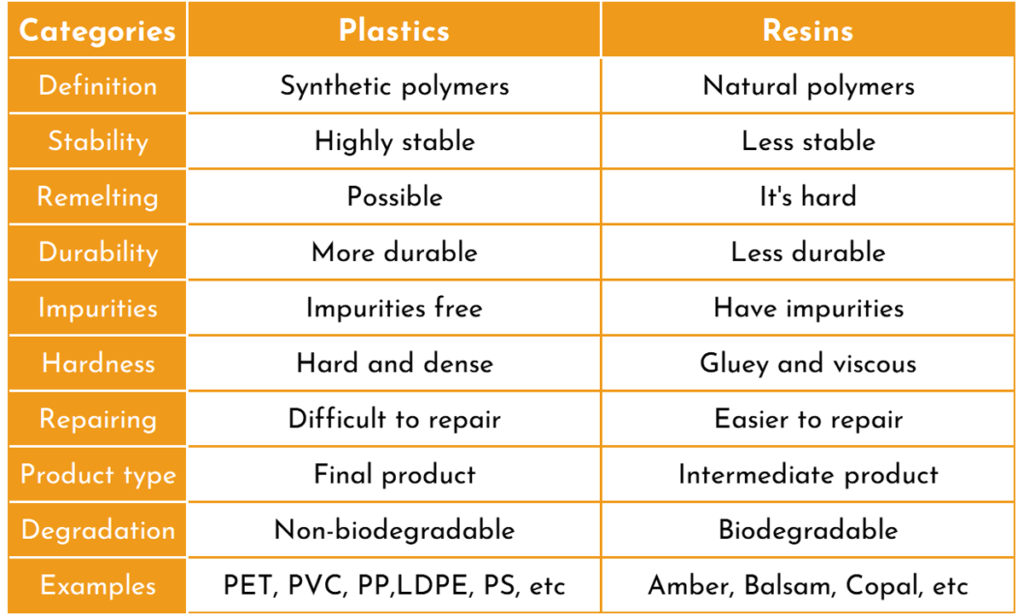
Fig 1: Comparative overview of resin and plastic materials used in collectibles.
| Property | Resin | Plastic | Industrial Implication |
|---|---|---|---|
| Origin | Natural & Synthetic | Synthetic (petrochemical) | Material sourcing impacts sustainability |
| Mechanical Strength | High stiffness and hardness | Variable; typically more flexible | Resin for durable pieces; plastic for flexible designs |
| Chemical Resistance | Excellent | Moderate | Resin preferred for chemical exposure |
| Transparency | Superior optical clarity | Variable | Resin ideal for transparent parts |
| Moldability | Requires precise molding | High flexibility | Plastic enables scalable production |
| Abrasion Resistance | High | Moderate to low | Resin ensures lasting surface quality |
| Cost | Higher | Lower | Resin for premium; plastic for volume |
| Applications | Models, jewelry, transparent components | Toys, containers, industrial parts | Choice driven by function and cost |
Origins and Composition of Resin and Plastic
Resins are derived from both natural sources such as pine and frankincense and synthetic polymers like polyester and epoxy. Plastics originate predominantly from petrochemical feedstocks, with diverse polymer classes including ABS, PVC, and polyethylene.

Fig 2: Examples of resin and plastic in collectible figurines.
TOYYIE Insight: Resin used in collectible production typically achieves a hardness of 70-85 on the Shore D scale, with transparency levels exceeding 90% light transmittance.
Mechanical and Chemical Property Differentiation
Resins exhibit superior mechanical rigidity and chemical resistance, making them ideal for collectibles demanding longevity. Plastics provide a range of physical properties from flexible to rigid, facilitating versatile applications.
TOYYIE Insight: High-impact ABS plastic provides tensile strength around 40 MPa and elongation at break near 20%, offering excellent balance between durability and moldability.
Transparency and Optical Qualities
One defining advantage of resin is its outstanding optical transparency, enabling crystal-clear collectible components. Plastics often require additional processing to achieve similar clarity.
Manufacturing Considerations and Scalability
Plastics offer notable processing flexibility through injection molding and extrusion, supporting high-volume production. Resins are typically processed via casting, favoring limited runs and artisanal craftsmanship.
Cost vs. Quality Trade-offs
The elevated production costs of resin reflect its premium material properties. Plastics deliver cost-effective solutions for mass-market toys, balancing performance with affordability.
TOYYIE Manufacturing Capabilities
- Precision Casting: Expertise in resin casting with minimal surface defects
- High-Volume Injection Molding: Advanced plastic molding lines
- Material Engineering: Customized polymer formulations
- Quality Assurance: Rigorous testing protocols per ISO/EN71/ASTM standards
- Design Collaboration: Concept through prototyping to mass production
TOYYIE – Elevating Collectible Excellence
Leverage TOYYIE’s comprehensive expertise in resin and plastic manufacturing to produce collectibles that combine aesthetic brilliance with industrial-grade durability.
Contact Us to Discuss Your Project →