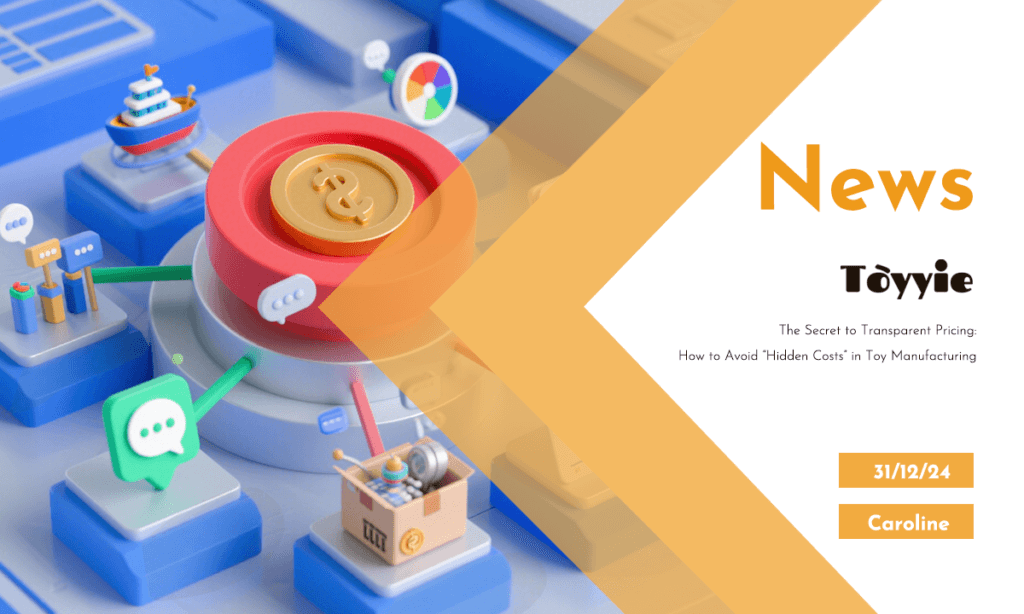
🔍 The Secret to Transparent Pricing: How to Avoid “Hidden Costs” in Toy Manufacturing 🧸
Technical Summary: Transparent pricing in toy manufacturing hinges on comprehensive OEM/ODM quotation elements including tooling amortization, material cost volatility (PVC, ABS resin), packaging precision, logistical freight dynamics, and compliance with ASTM F963 and EN71-3 safety standards.
📌 Introduction📌
In my years of experience in the trade industry, cost control has always been an unavoidable topic when communicating with clients. This is especially true for those who are new to commissioning custom toy manufacturing projects. Almost every client asks me the same question: “Our budget is tight. Can we keep costs under control? Is it possible to avoid hidden fees?” This isn’t just a common concern—it’s often the deciding factor when clients choose a manufacturer.
Today, I want to share my insights on how to navigate the potential pitfalls of hidden costs in toy manufacturing, ensuring you manage your budget more effectively while avoiding unwelcome surprises.
TOYYIE Engineering Insight: Typical molding cycle times in toy production range from 20-40 seconds per shot depending on material (PVC vs. ABS). TOYYIE’s partnership with 7 specialized factories ensures mold durability with ±0.1mm tolerance, minimizing rework costs. Factoring in draft angles of 1.5°-3° and accounting for shrinkage rates (PVC ~1.5%, ABS ~0.4%) in quotations reduces risk of hidden tooling or dimensional adjustment fees.
💡 Why Do Hidden Costs Happen?
Hidden costs often arise not from deliberate concealment but from a lack of clear communication or differing expectations between the client and the manufacturer. Here are some of the most common sources of hidden costs:
Lack of a Detailed Quotation
Have you ever received an initial quote that seemed too good to be true, only to find additional charges piling up later? These might include mold amortization fees, sample production costs, or quality inspection charges. Such surprises typically happen when the initial quotation is overly simplistic and doesn’t account for the project’s full scope.
My advice? Don’t just look at the headline number in a quote. Pay close attention to the supplier’s sincerity during discussions and how detailed their quotations are. Once production begins, it’s often too late to negotiate, and you may find yourself paying for sunk costs.
Fluctuating Raw Material Prices
Prices for raw materials like resin, PVC, or metal—commonly used in collectible toys—can be subject to market volatility. If your supplier hasn’t addressed this upfront, you may face higher-than-expected costs later. Always ensure the validity period of the quoted prices is clearly stated.
Special Customization Requests
You might want to add personalized touches to your product, such as unique paintwork or intricate packaging. If these requirements aren’t specified during the initial discussions, they can emerge as additional costs later in the process. It’s crucial to outline all your needs from the beginning. This not only helps the manufacturer provide accurate pricing but also ensures smoother project execution.
For example, if you initially omit the need for custom packaging and bring it up mid-production, the manufacturer may need to create new molds for the packaging, potentially delaying your timeline and increasing costs.
Logistics and Tariffs
Shipping fees and customs duties are often overlooked when planning budgets, yet they can significantly impact your project’s final cost. While your supplier can provide initial freight estimates based on your order volume, it’s important to remember that shipping fees fluctuate based on international market conditions. Tariffs, on the other hand, are determined by your country’s import regulations. Be sure to research these policies before placing an order.
ABS toys can handle more wear and tear, but they still need protection during transit to prevent scratches and dents. Packaging for ABS toys should be sturdy, but not overly padded since the material is resistant to impact.
TOYYIE Engineering Insight: Material shrinkage rates must be integrated into pricing models: PVC averages 1.5%-2.0%, ABS 0.4%-0.7%. TOYYIE’s advanced CAD-to-CAM process ensures dimensional accuracy within ±0.1mm, reducing costly remold requests. Additionally, TOYYIE factories comply with ASTM F963 and EN71-3 standards, guaranteeing product safety without unexpected compliance fees.
🛠️ How to Avoid Hidden Costs
Preventing hidden costs comes down to careful planning and clear communication. Based on my experience, here are four golden rules to follow:
Request a Detailed Quotation
Ensure your

Search Toyyie BLOG
Categories
Join our NEWSLETTER
Stay in the know and receive DIY guides from our PROS: new product updates + exclusive promotions!
Trending Topics