The 2026 Toy Landscape: A Tale of Two Markets
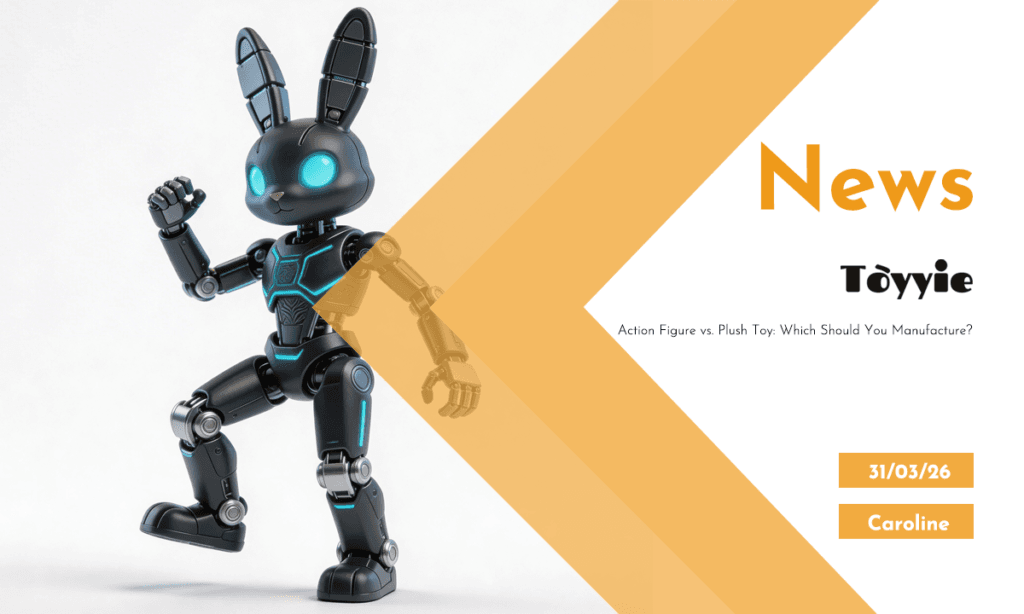
In the B2B manufacturing world, the choice between a rigid “Action Figure” and a soft “Plush Toy” is not just an aesthetic decision—it is a financial one. As we move into 2026, the global toy market is bifurcating. On one side, the Stuffed & Plush Toy Market is projected to reach $12.1 billion, driven by “comfort culture” and high-margin IP like Squishmallows. On the other, the Action Figure & Collectible Market continues to dominate the high-end enthusiast space, where a single 1/6 scale figure can command a retail price of $250+.
Understanding the engineering requirements, cost structures, and logistics of each is the first step in ensuring your brand’s long-term profitability.
1. Action Figures: The Engineering Masterpiece
The Advantages: High Margins & Collector Loyalty
- Perceived Value: Because of the high detail, articulation, and premium packaging, action figures often have a higher “Price-to-Weight” ratio.
- Fidelity: Using PVC, ABS, and POM, action figures can achieve ±0.05mm tolerances, allowing for intricate mechanical details and realistic textures.
- Scalability: Once the steel mold is built (Shot Life: 1,000,000+), the unit cost drops significantly, making high-volume runs extremely profitable.
The Challenges: High Entry Barrier
- Initial Investment (CapEx): You are essentially building a “miniature machine.” A standard 6-inch figure with 15 points of articulation requires multiple steel molds, costing between $8,000 and $25,000.
- Complex Assembly: A single figure can have 20–40 individual parts that must be sonic-welded or snapped together, increasing the risk of Assembly Defects.
- Lead Time: The DFM (Design for Manufacturing) and tooling phase alone can take 12–16 weeks.
2. Plush Toys: The Versatile Soft Asset
The Advantages: Low Risk & High Customizability
- Low Setup Costs: Instead of $20,000 molds, you are paying for Paper Patterns and Embroidery Digitization. Setup fees for a professional plush run typically range from $1,200 to $2,500.
- Safety & Compliance: Plush toys are inherently safer for younger demographics, making them easier to pass ASTM F963 and EN71 physical safety tests (no sharp points or small rigid parts).
- Tactile Appeal: In 2026, “Sensory Toys” are a massive trend. The choice of fabric (Minky, Sherpa, RPET) can define the brand’s identity more than the shape itself.
The Challenges: Logistics & Competition
- Volumetric Weight (DIM Weight): Plush toys are mostly air. In 2026, shipping costs are calculated by volume, not just weight. A large plush can cost 3x more to ship than a heavy action figure of the same retail value.
- Market Saturation: The barrier to entry is low, meaning you are competing with thousands of “generic” plush brands. Success requires unique IP or superior material quality.
- Labor Intensity: Plush toys are still hand-sewn. This means the unit cost does not drop as sharply as plastic toys when you scale from 1,000 to 10,000 units.
3. Market Analysis: Kids vs. Collectors
| Feature | Action Figures | Plush Toys |
|---|---|---|
| Primary Audience | Collectors (14+), Kids (6–12) | Toddlers (0–3), All Ages |
| Price Sensitivity | Low (Collectors pay for detail) | Moderate (Parents look for value) |
| Durability | High (Rigid plastic) | Moderate (Seams can tear) |
| Collectibility | Very High (Series, Variants) | High (Limited Edition drops) |
| Geographic Trend | Strong in US, HK, Japan | Global, High growth in EU/Asia |
4. Cost and Production Comparison (2026 Data)
To help your brand make a data-driven decision, we have compared the financial models for a typical 1,000-unit production run:
Financial Decision Matrix
| Metric | Action Figure (6-inch) | Plush Toy (10-inch) |
|---|---|---|
| Tooling/Setup Cost | $12,000 – $18,000 | $1,500 – $2,500 |
| Unit Cost (at 1k) | $6.50 – $9.00 | $4.00 – $7.00 |
| Prototyping Time | 4 – 6 Weeks | 2 – 4 Weeks |
| Mass Production Time | 8 – 12 Weeks | 4 – 6 Weeks |
| Shipping Efficiency | High (Small box) | Low (Large box, requires vacuum) |
| Gross Margin Potential | 65% – 80% | 50% – 70% |
5. How to Choose: The TOYYIE Strategy
Choose Action Figures if:
- Your IP is Character-Driven with complex mechanical or armor details.
- You have a Capital Buffer of at least $25,000 for the first launch.
- You are targeting the High-End Collector or Gaming demographic.
- You want a product that feels like a “Premium Tech” item.
Choose Plush Toys if:
- Your IP is Mascot-Driven, cute, or focused on “Lifestyle” branding.
- You need to go from Concept to Market in under 90 days.
- You want to test the market with a Low MOQ (100–300 units).
- You are targeting Young Children or the Gift/Souvenir market.
6. Why TOYYIE? Expertise in Both Worlds
At TOYYIE, we don’t believe in “one size fits all.” We operate dedicated production lines for both high-precision Injection Molding and artisan Plush Sewing.
- Hybrid Solutions: In 2026, “Vinyl-Plush” hybrids (soft bodies with rigid plastic heads) are a top-performing category. We are one of the few manufacturers capable of managing the Differential Shrinkage and assembly of these mixed-material products.
- Engineering DFM: Whether it’s optimizing Draft Angles for your figure or Seam Placement for your plush, our engineers ensure your design is “Production-Ready.”
- Global Compliance: We manage all CPSIA, REACH, and ISO 9001 certifications, so you can focus on marketing while we handle the technical safety.
Manufacturing Compliance & IP Protection
Regardless of the material, your IP is your most valuable asset.
- Mold Security: For action figures, your steel molds are stored in our climate-controlled, high-security facility.
- Pattern Protection: For plush, your digital cutting files are protected by our Digital Asset Erasure protocol post-production.
- Safety First: Every product undergoes Lead/Phthalate Testing and Physical Stress Tests to ensure zero liability for your brand.
Still Unsure? Let’s Run the Numbers.
Contact TOYYIE today for a comparative cost-benefit analysis of your project in both plastic and plush.