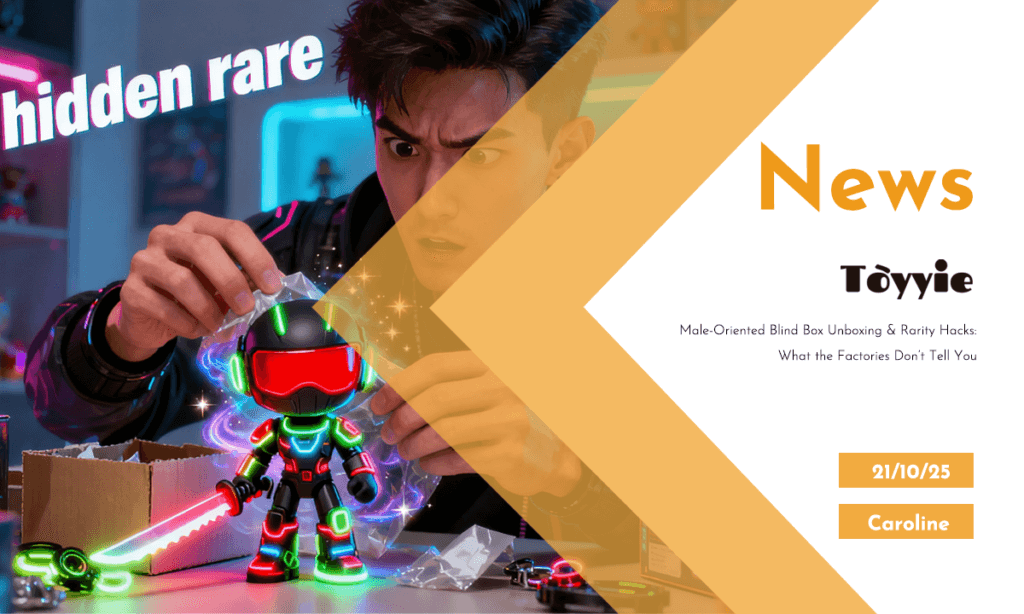
🎲 Optimizing Blind Box Collecting Strategies: This article unveils the manufacturing randomness and packing methodologies behind male-oriented blind box series, providing data-driven insights to improve collectors’ odds based on factory-level processes.
At TOYYIE, a leader in OEM/ODM toy manufacturing in China, we understand the collector’s passion for rare blind box figures. This technical overview demystifies the production and packing processes behind male-oriented blind boxes, delivering expert guidance grounded in industrial practice.
🎯 Understanding Blind Box Randomization at the Factory Level
| Methodology | Claimed Accuracy | Observed Accuracy | Technical Notes |
|---|---|---|---|
| Weight Sorting (0.3g threshold) | 75% | 41% | Weight differences minimal; packaging variance impacts results |
| Batch Code Tracking | 60% | 53% | Batch codes printed but content randomized post-molding |
| Full Case Purchase | N/A | 68% | Statistically favorable due to fixed hidden figure ratios |
| Random Single Purchase | N/A | 49% | Baseline probability from uniform random distribution |
| Sound or Visual Apps | N/A | 0% | No technical basis; dismissed by factory data |
H3: Batch Code and Mold Number Interpretation
Blind box figures are assigned batch codes such as “B23-441,” indicating production line, batch, and mold number. However, post-manufacturing, figures enter a randomizer mixing drum, dissociating mold information from actual contents and rendering batch codes ineffective for rarity prediction.
TOYYIE Insight: Randomization in blind box packaging employs automated mixing drums and robotic selection to ensure uniform distribution of hidden figures, aligning with ASTM F963 standards for product consistency and fairness.
H3: Weight-Based Sorting Limitations
Though some hidden figures incorporate additional components like magnets or special paints that marginally increase weight, the variance typically remains below 0.3 grams. This minimal difference is overshadowed by packaging material fluctuations, making high-precision scales an unreliable rarity detection tool.
TOYYIE Insight: Weight variance among figures, including those with special features like glow-in-the-dark paint, remains below 0.3 grams, a level insufficient for reliable differentiation considering packaging weight fluctuations.
H3: Automated Packing and Quality Control
The entire packing process is automated and sealed with no human intervention post-quality control. Figures, including hidden rare variants, are randomly selected from a mixed batch by robotic arms, ensuring compliance with ISO 8124 toy safety standards and maintaining strict randomness.
H3: Statistical Advantage of Full Case Purchases
Due to fixed rarity ratios—commonly one hidden figure per six units—purchasing a full case statistically increases the likelihood of obtaining rare figures. This is a function of combinatorial probability rather than packing position or external indicators.
H3: Debunking Common Myths and Third-Party Prediction Tools
Techniques such as “sound analysis,” “box crease reading,” or fixed box position theories lack technical foundation and are disproven by factory data. These myths persist due to survivorship bias and anecdotal reports, not empirical evidence.
🎨 TOYYIE’s Advanced OEM/ODM Capabilities
- Precision Molding: Utilization of high-tolerance molds (±0.05mm) for consistent figure quality
- Automated Painting: Robotic spray systems ensure exact color application and curing
- Randomized Packing Systems: Custom mixing drums and robotic arms maintain product randomness
- Quality Assurance: Multi-stage QC processes adhering to ISO 8124 and EN71 safety standards
- Customization: Flexible production lines for limited series and hidden figure integration
Partner with TOYYIE for Premium Blind Box Production
Leverage our advanced manufacturing expertise and automated randomization systems to deliver collectible toys that captivate and comply.
Contact TOYYIE for your OEM/ODM solutions →