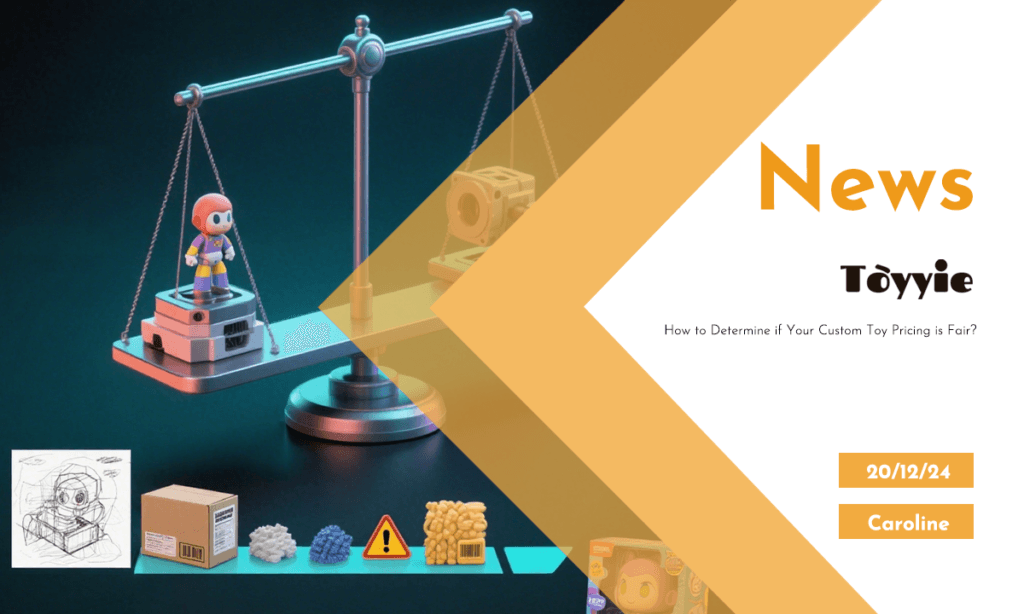
💸 How to Determine if Your Custom Toy Pricing is Fair? 🧸
Technical Summary: Understanding cost drivers such as tooling investment amortization, material Shore A hardness, production scale economies, and manufacturing lead times is essential for evaluating fair pricing in custom toy manufacturing.
📌 Introduction📌
When it comes to customizing toys, one of the first questions most clients ask is: “Why is the price so different from one manufacturer to another?” The toy industry, especially the market for trendy or collectible toys, can have vast pricing differences, and navigating this complexity is crucial to making a smart, informed decision.
Having worked in the toy manufacturing industry for many years, I’ve seen just about every pricing scenario you can imagine. Some clients have been thrilled to find an affordable price, only to discover hidden costs later. Others have been shocked by what seems like an unreasonable quote, not understanding why it’s higher than expected. So, how do you determine if the custom toy price you’re being offered is fair? How do you avoid the pitfalls and make sure you’re getting good value without being overcharged? Let’s dive into this topic together.
🤔 Why Are Custom Toy Prices So Different?
First, let’s understand why there is such a range in prices when it comes to custom toys. The custom toy manufacturing process is far from simple; it involves various steps, materials, and expertise. Here are the key factors that influence the final price:
Design Complexity
The more intricate the design, the more expensive it will be to produce. For example, a toy with multiple moving parts, special textures, or highly detailed features requires advanced tooling and production techniques. If the design needs multiple prototypes or revisions, that will increase costs too.
TOYYIE Engineering Insight: Complex designs often require tooling with tight draft angles (1°–3°) to facilitate mold release and reduce shrinkage rate variability. TOYYIE’s integrated OEM/ODM workflow ensures prototype cycle times average 15 days with ±0.1mm dimensional tolerances to minimize costly revisions.
Materials Used
The material choice for the toy plays a significant role in determining the price. High-quality, durable materials or eco-friendly materials typically cost more. For example, PVC is cheaper than ABS or soft-touch silicone. The weight of the material, its durability, and whether it’s sourced responsibly all affect the price.
TOYYIE Engineering Insight: Materials with a Shore A hardness range of 20–80 are commonly used, balancing flexibility and durability. TOYYIE strictly adheres to ASTM F963 and EN71-3 compliance for chemical safety, while shared equity in 7 specialized factories optimizes material sourcing and scrap rates below 2%.
Production Scale
Custom toy manufacturers often have Minimum Order Quantities (MOQ) for each product. Smaller production runs tend to cost more per unit, as fixed costs are spread over fewer pieces. Larger runs often benefit from economies of scale, lowering the price per toy. If you’re ordering a limited edition toy with a small MOQ, the price per unit will naturally be higher.
TOYYIE Engineering Insight: TOYYIE leverages shared equity in 7 factories to optimize batch sizes and reduce scrap rate to under 1.5%. Typical injection molding cycle times range from 20–40 seconds depending on material and wall thickness, allowing flexible MOQs from 500 to 50,000+ units with consistent quality.
Tooling and Molds
The tooling process, including creating molds for casting, is one of the most significant upfront costs in toy manufacturing. If the manufacturer needs to create a new mold for each toy design, this can add significant costs. On the other hand, if the manufacturer already has pre-existing molds that are compatible with your design, the cost will be lower.
TOYYIE Engineering Insight: Tooling costs amortize over expected production volumes; typical mold fabrication costs range from $5,000–$15,000 with ±0.05mm mold insert tolerances. TOYYIE’s OEM/ODM model prioritizes mold reuse and modular inserts to control upfront tooling expenses and reduce lead times to 4–6 weeks.
Packaging and Shipping
Packaging also contributes to the overall cost. Custom packaging, especially high-quality, branded, or eco-friendly options, will increase your total price. Additionally, shipping costs can fluctuate depending on the size, weight, and destination of the order.
TOYYIE Engineering Insight: Effective volumetric weight optimization in packaging design reduces shipping costs by up to 20%. TOYYIE integrates sustainable packaging options compliant with REACH regulations, ensuring minimal environmental impact and brand value enhancement.

Labor and Lead Times