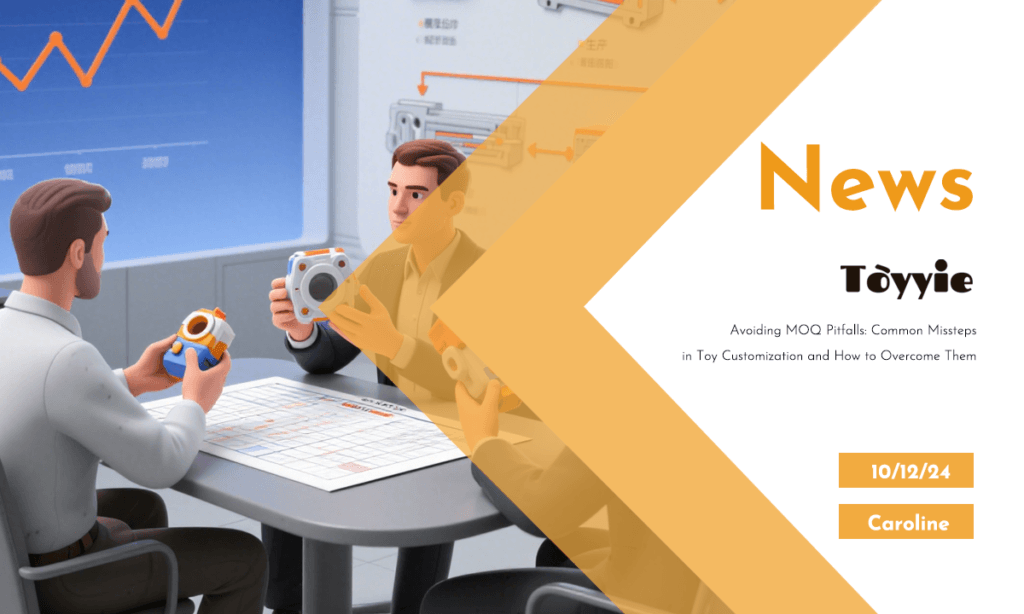
🚫 Avoiding MOQ Pitfalls: Common Missteps in Toy Customization and How to Overcome Them 🧸
Technical Summary: This article explores the critical role of Minimum Order Quantity (MOQ) in toy manufacturing, emphasizing fixed cost amortization, batch production optimization, and material procurement logistics within OEM/ODM workflows.
📌 Introduction📌
In the world of custom designer toys, MOQ (Minimum Order Quantity) is a critical factor that’s often misunderstood. Over the years, I’ve encountered many clients who didn’t fully grasp the implications of MOQ, leading to challenges during production. For example, insufficient order quantities can result in skyrocketing costs, while excessively high MOQs may cause missed market opportunities.
But is MOQ merely a barrier set by manufacturers to complicate orders? Not at all. MOQs are established for valid reasons, and many client struggles stem from misinterpretations of these requirements or a lack of preparation. Today, drawing from decades of experience, I want to share insights into common MOQ-related misconceptions and practical strategies to avoid these pitfalls. My goal is to help you improve order efficiency and maximize the value of your investments.
TOYYIE Engineering Insight: MOQ determination is directly influenced by mold tooling amortization over batch sizes, typical molding cycle times of 30-45 seconds per unit, and material shrinkage rates of approximately 1.5%-2.0% for PVC and ABS plastics, all critical to balancing cost and production efficiency. TOYYIE’s equity in 7 specialized factories ensures strict adherence to ASTM F963 and EN71-3 Compliance for safety and quality.
🤔 Understanding Common MOQ Misconceptions
Misconception 1: Lower MOQ Is Always Better
Many clients assume that a manufacturer offering lower MOQs is the better option. However, excessively low MOQs can introduce the following risks:
- Higher Per-Unit Costs: Smaller orders mean fixed costs, such as mold tooling and machine setup fees, are distributed over fewer units, driving up the unit price.
- Quality Inconsistencies: Small orders are often deprioritized in production schedules, increasing the risk of process variability and tolerance deviations beyond ±0.1mm.
- Supply Chain Inefficiency: Small batches can disrupt raw material ordering and lead to inefficient inventory turnover, delaying delivery timelines.
Misconception 2: High MOQ Guarantees Cost Efficiency
Conversely, some clients are enticed by the lower unit costs of high MOQs but fail to consider market demand and sales capacity. This can result in:
- Excess Inventory: Overproduction ties up capital and storage space, increasing holding costs and inventory obsolescence risks.
- Market Risk: Designer toys are highly trend-sensitive, and unsold stock can quickly lose value, affecting ROI.
Misconception 3: MOQ Is a Non-Negotiable Rule
Some clients view MOQ as a rigid standard, but in reality, understanding the logic behind MOQ can help you negotiate more flexible solutions based on production scheduling, tooling amortization, and material batch management.
TOYYIE Engineering Insight: MOQ impacts are closely tied to draft angles in mold design, which typically range from 1.5° to 3° to facilitate demolding and reduce scrap rates. Batch sizes affect cycle time optimization and material wastage, with TOYYIE’s factories maintaining tensile strength standards for ABS at 40-50 MPa and Shore A hardness for soft-touch finishes at 60-70.
🔍 Why Do Manufacturers Set MOQs?
Before seeing MOQ as a challenge, it’s essential to understand why manufacturers set them:
1️⃣ Covering Fixed Costs
Producing designer toys involves significant upfront costs, including precision mold creation with tolerances of ±0.05mm, material procurement of high-grade plastics such as ABS or PVC, and complex equipment setup for injection molding or painting stations. A minimum order ensures these costs are distributed effectively over the production run.
2️⃣ Optimizing Production Efficiency
Toy manufacturing involves batch operations like painting, assembly, and quality inspections. Very small orders can disrupt workflow, cause machine idle time, and waste resources such as paint and packaging materials calibrated for batch sizes.

Search Toyyie BLOG
Categories
Join our NEWSLETTER
Stay in the know and receive DIY guides from our PROS: new product updates + exclusive promotions!
Trending Topics